
 Reviewed by
 Your happiest customers are your cheapest marketing channel, and most stores never tap them. Referral marketing turns the people who already love your products into new shoppers. It does that at a fraction of the cost of ads. You’re probably sitting on the raw material already: customers who’d gladly share what they found.
People trust people. Nielsen’s research found that 88% of people trust recommendations from those they know more than any other channel. No ad you can buy carries the weight of a friend saying “I got this here.”
I’ve watched how sharing behaves inside SaveTo Wishlist. Every time a shopper shares a saved list, it puts your products in front of new people. This guide walks through referral marketing examples that work, then how to build them into your store. We’ll start with the sharing you can switch on today.
Table Of Contents
What Is Referral Marketing?
Referral marketing is the practice of encouraging existing customers to recommend your store. You then turn those recommendations into new sales. It can be informal word of mouth or a structured program with rewards. Either way, the engine is the same: trust passed from one person to another.
For ecommerce, that trust is gold. A visitor arriving through a friend’s recommendation starts warmer than someone who clicked a cold ad. They’ve effectively been pre-sold. So they browse with intent and convert at a higher rate.
The goal of a referral strategy is simple. Make recommending you easy and rewarding, then capture the new shoppers it brings in.

Why Referral Marketing Works
Referral marketing works because it borrows trust you can’t buy. An ad interrupts; a recommendation invites. When the suggestion comes from someone the shopper knows, the usual skepticism drops away. That’s why personal recommendations sit at the top of Nielsen’s trust rankings.
It also compounds. A happy customer refers a friend, who has a good experience and refers another. As a result, the channel grows without proportional spend. Unlike paid traffic, which stops when you stop paying, a referral loop keeps working.
🔍️ What we’ve seen: Store owners assume referrals only happen with a formal program and a big budget. In practice, a lot of referral traffic comes from simple sharing most stores never enable. Turn on easy sharing first, and you’ll often capture word of mouth you were missing.
Referral Marketing Examples That Work
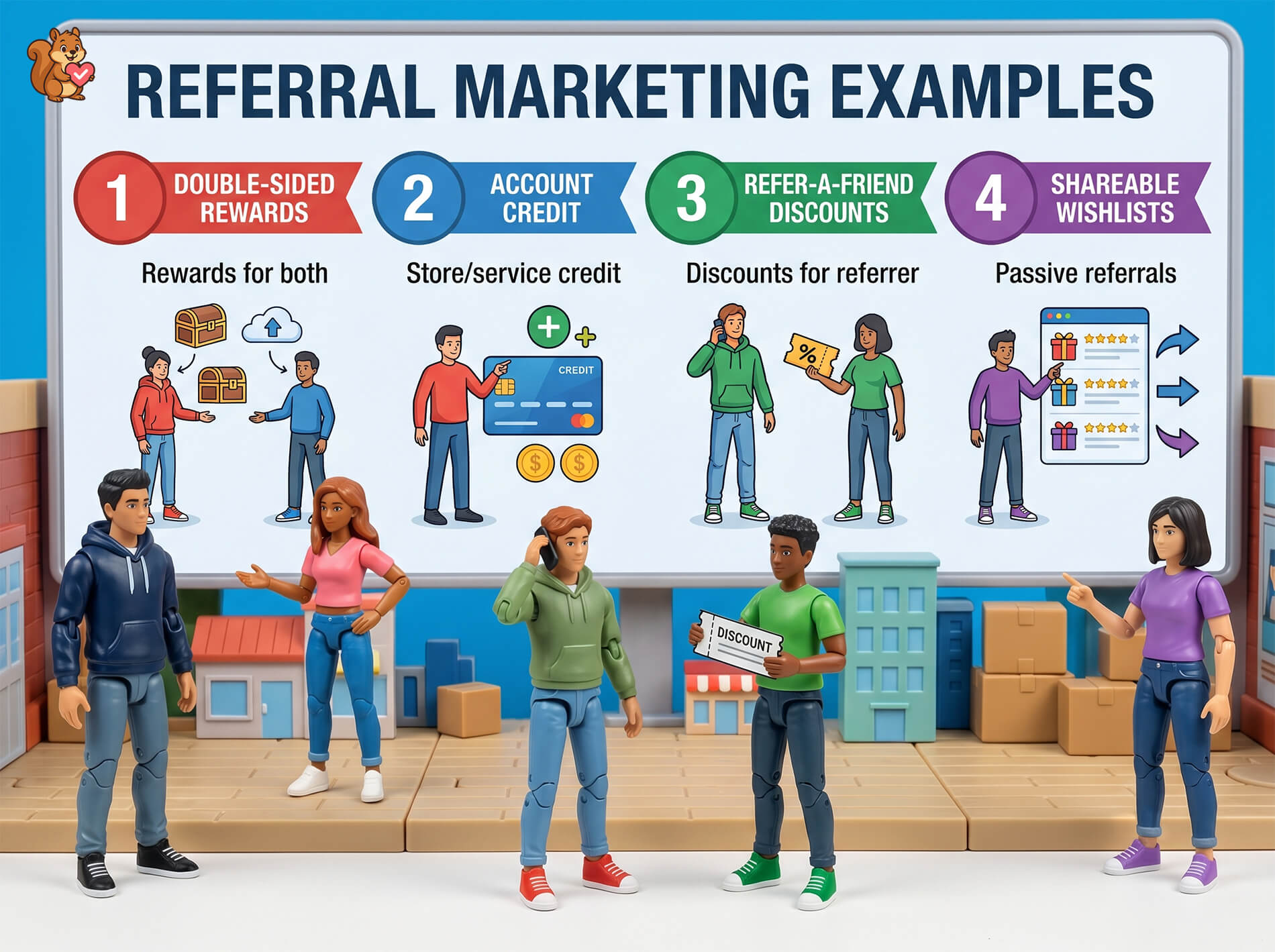
The easiest way to understand referral marketing is to see it in action. A few well-known referral marketing examples show the range of what works:
- Double-sided rewards (the Dropbox model): Dropbox gave the referrer and the new user extra storage, so both had a reason to join.
- Account credit (the travel and ride-share model): Companies like Airbnb gave credit for successful referrals, turning happy customers into recruiters.
- Refer-a-friend discounts (the ecommerce staple): The referrer gets store credit or a discount when a friend’s first order lands.
- Shareable wishlists (the passive referral): When a shopper shares a saved list, every recipient sees your store, with no program to manage.
The thread connecting all of them: make sharing easy, and give both sides a reason to care. For a WooCommerce store, the lowest-effort start is the last one, since sharing is already built into your wishlist.
How To Build A Wishlist-Driven Referral Engine
Now that you know what a successful referral loop looks like, it’s time to build one for your store. You don’t need a massive marketing budget or a complex custom setup to get started. By leaning into the wishlist features your store already uses, you can naturally encourage sharing, remove friction, and capture the new traffic it brings.
Here are four tactics you can use to turn your happy shoppers into an active growth channel in four steps.
1. Turn shareable wishlists into referrals
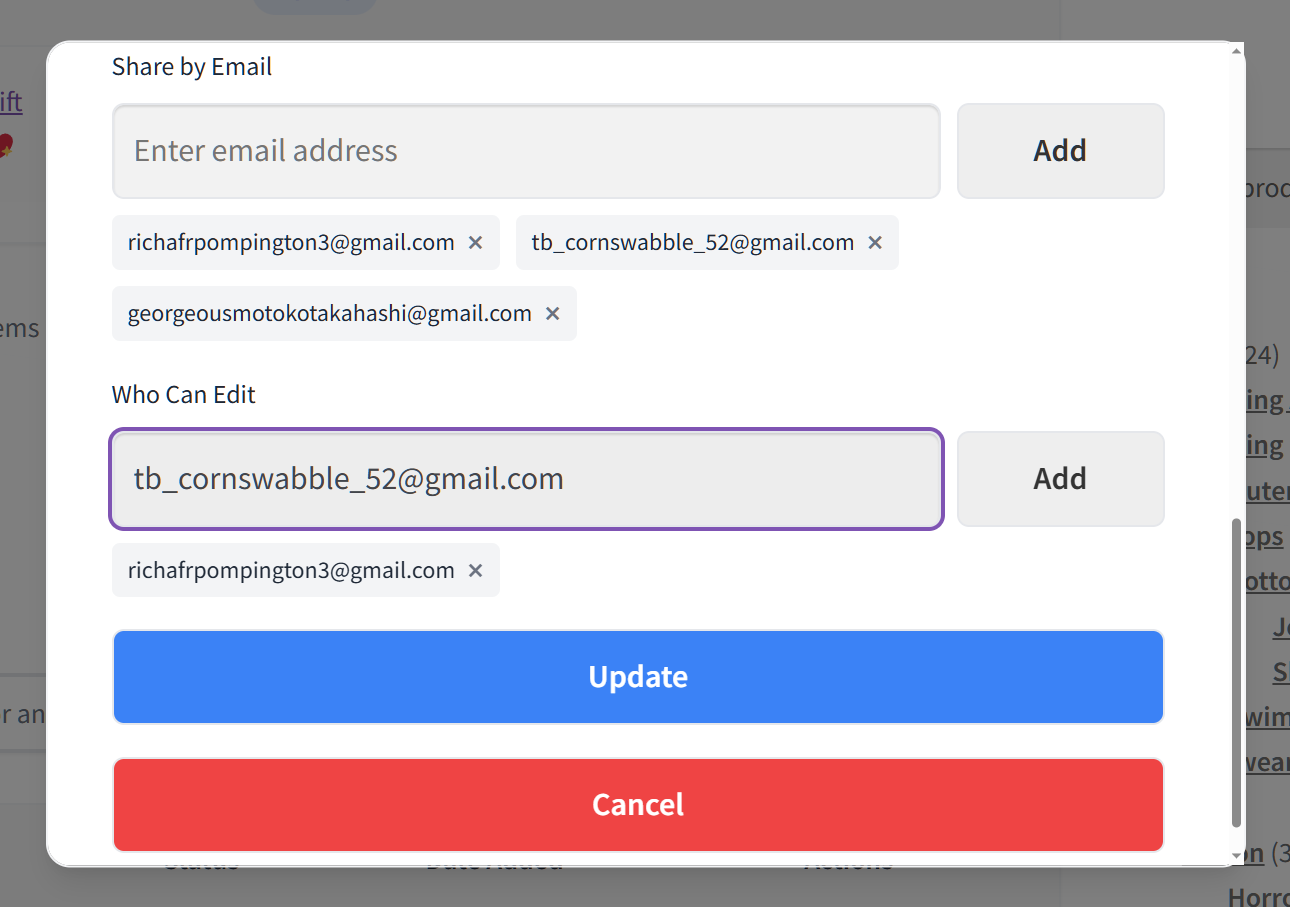
The simplest referral channel needs no program: shareable wishlists. When a shopper saves products and shares that list, your store lands in front of new people. Think friends, family, and gift-givers who may never have heard of you.
SaveTo Wishlist gives every list a shareable link and social sharing options. So wishlist sharing becomes a natural referral moment. Someone building a gift list sends it to whoever’s buying, and that person arrives ready to shop. You control how lists are shared and who can view them on the sharing and permissions page.
This is the referral program at its most frictionless. The customer isn’t doing you a favor. They’re sharing something useful to them, and your store comes along for the ride.
2. Make sharing easy
Every extra step costs you referrals. If sharing takes more than a tap or two, most people won’t bother. So remove the friction.
Put share options where intent is highest: on the wishlist, after a purchase, and in confirmation emails. Use the channels people actually use, like messaging apps and email. Don’t bury sharing behind an account setting. The easier you make it, the more often it happens.
Clear prompts help too. A simple “Share your list with whoever’s shopping for you” gives both permission and a reason. That beats a lonely share icon they’ll scroll past.
3. Give people a reason to refer
Sharing happens on its own, but incentives accelerate it. A reward for referring, plus one for the new customer, turns occasional sharing into a habit.
A double-sided offer works well. The referrer gets a perk when their friend buys, and the friend gets a welcome discount. You can run the rewards with a loyalty program that handles incentives automatically.
Meanwhile, your wishlist sharing supplies the organic referral moments. Keep the reward meaningful but sustainable, so the math still works for your margins.
The key is to reward the outcome you want: a new paying customer. Don’t just reward the act of sharing a link.
4. Reward and recognize your advocates
A small group of customers will refer far more than the rest. Identifying and nurturing those advocates pays off. In effect, they’re an unpaid sales team.
Wishlist activity helps you spot them. Your most engaged shoppers, the ones saving and sharing most, are natural advocates. SaveTo Wishlist Pro analytics even surface this, prompting referral plays for your most active wishlisters. Give them early access, recognition, or a better reward, and they’ll keep bringing people in.
Treat advocacy as a relationship, not a transaction. The stores that win at referrals make their best customers feel genuinely valued.
Measure Whether Referrals Are Working
Track a few signals, so you know your referral efforts are paying off:
- Referral traffic and conversions: visitors arriving from shared links or referral codes.
- Share rate: how often customers share their wishlist or store.
- New customers per advocate: which referrers actually drive sales.
- Conversion rate of referred visitors versus other traffic.
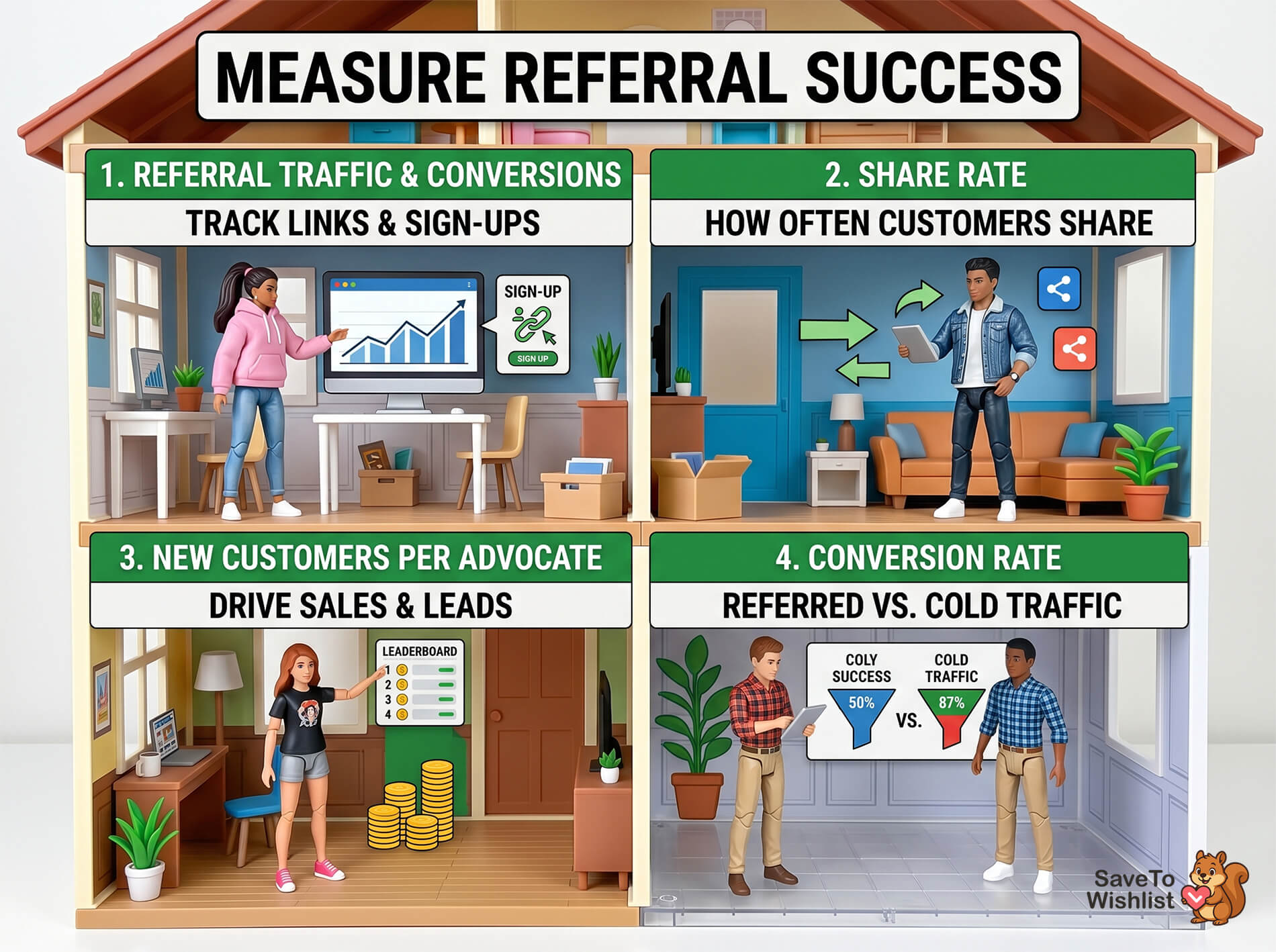
Referred shoppers usually convert better than cold traffic, so watch that gap. If it’s wide, referrals deserve more of your attention and budget.
Your Referral Marketing Checklist
- Turn on shareable wishlists to capture organic referrals.
- Make sharing a one- or two-tap action across the store.
- Offer a double-sided incentive for referrals that lead to a sale.
- Identify and reward your most active advocates.
- Track referral traffic, share rate, and referred-visitor conversion.
Turn Your Customers Into Your Best Channel
Referral marketing rewards stores that make recommending them effortless. You don’t need a big budget to start. You need the trust your happy customers already carry, and an easy way to pass it on. Shareable wishlists give you that for free, and a simple incentive turns it into a reliable channel.
Here’s the short version:
- Turn shareable wishlists into referrals you can switch on today.
- Make sharing effortless across the store.
- Give people a reason to refer with a double-sided offer.
- Reward your advocates and track what works.
Ready to turn sharing into sales? Put your wishlist sharing to work. Download SaveTo Wishlist for free to let your customers start sharing, then upgrade to SaveTo Wishlist Pro for more advanced sharing controls!
FAQs: Referral Marketing Examples
What is referral marketing in ecommerce?
Referral marketing is encouraging existing customers to recommend your store, then converting those recommendations into sales. It can be informal sharing or a structured program with rewards. Either way, it runs on trust passed between people.
Why is referral marketing so effective?
Because personal recommendations are trusted far more than ads. Nielsen’s research ranks recommendations from people we know as the most trusted form of advertising. So referred shoppers arrive warmer and tend to convert better than cold traffic.
How do wishlists support referral marketing?
Shareable wishlists create referral moments automatically. When a shopper shares their saved list, your products reach new people who trust the person sharing. That’s especially powerful for gifts. It’s organic referral you can enable without building a program.
Do I need a referral program with rewards?
Not to start. Enabling easy sharing captures organic referrals on its own. Adding a double-sided incentive accelerates it. You can run the rewards with a dedicated loyalty tool while your wishlist sharing supplies the moments.
How do I measure referral marketing success?
Track referral traffic and conversions, how often customers share, and new customers per advocate. Also compare the conversion rate of referred visitors versus other traffic. Referred shoppers usually convert better, so a wide gap means referrals are worth scaling.