

 Reviewed by
 For years, ecommerce ran on third-party cookies that tracked shoppers across the web. Those cookies are now far less reliable. Safari and Firefox already block them by default, and privacy rules keep tightening. Nowadays, the stores that thrive are the ones that get customers to tell them what they want directly. That’s the promise of zero-party data: information a customer knowingly shares, rather than something you infer from surveillance.
This shift isn’t just about privacy compliance. According to Forrester, zero-party data is a strategic asset that deepens customer relationships, not just ad targeting, When a customer chooses to share their preferences, you get cleaner data. In return, they get a better experience.
In our experience, a wishlist turns out to be one of the purest zero-party signals there is. We’ve watched what shoppers reveal through SaveTo Wishlist, and the pattern is consistent.
For these reasons, this guide explains what zero-party data is and why it matters now. It also shows how wishlists let you collect it without a single creepy tracker.
Table Of Contents
- What Is Zero-Party Data?
- Why Zero-Party Data Matters Now
- Why A Wishlist Is The Cleanest Zero-Party Signal
- How To Collect And Use Zero-Party Data In WooCommerce
- Handle Zero-Party Data In A Way That Builds Trust
- Your Zero-Party Data Checklist
- Build On Data Customers Choose To Share
- Frequently Asked Questions
What Is Zero-Party Data?
Zero-party data is simply the information a customer intentionally and proactively shares with your brand. Think about saved products, stated preferences, or quiz answers. It’s given knowingly, rather than tracked silently in the background.
It really helps to look at the three main types of data side-by-side:
- Zero-party data: What customers explicitly tell you (like the exact products they save to a wishlist or the sizes they select).
- First-party data: What you observe on your own website (like the pages they click around on or their past purchases).
- Third-party data: Information you buy from others, usually collected through sneaky cross-site cookies.
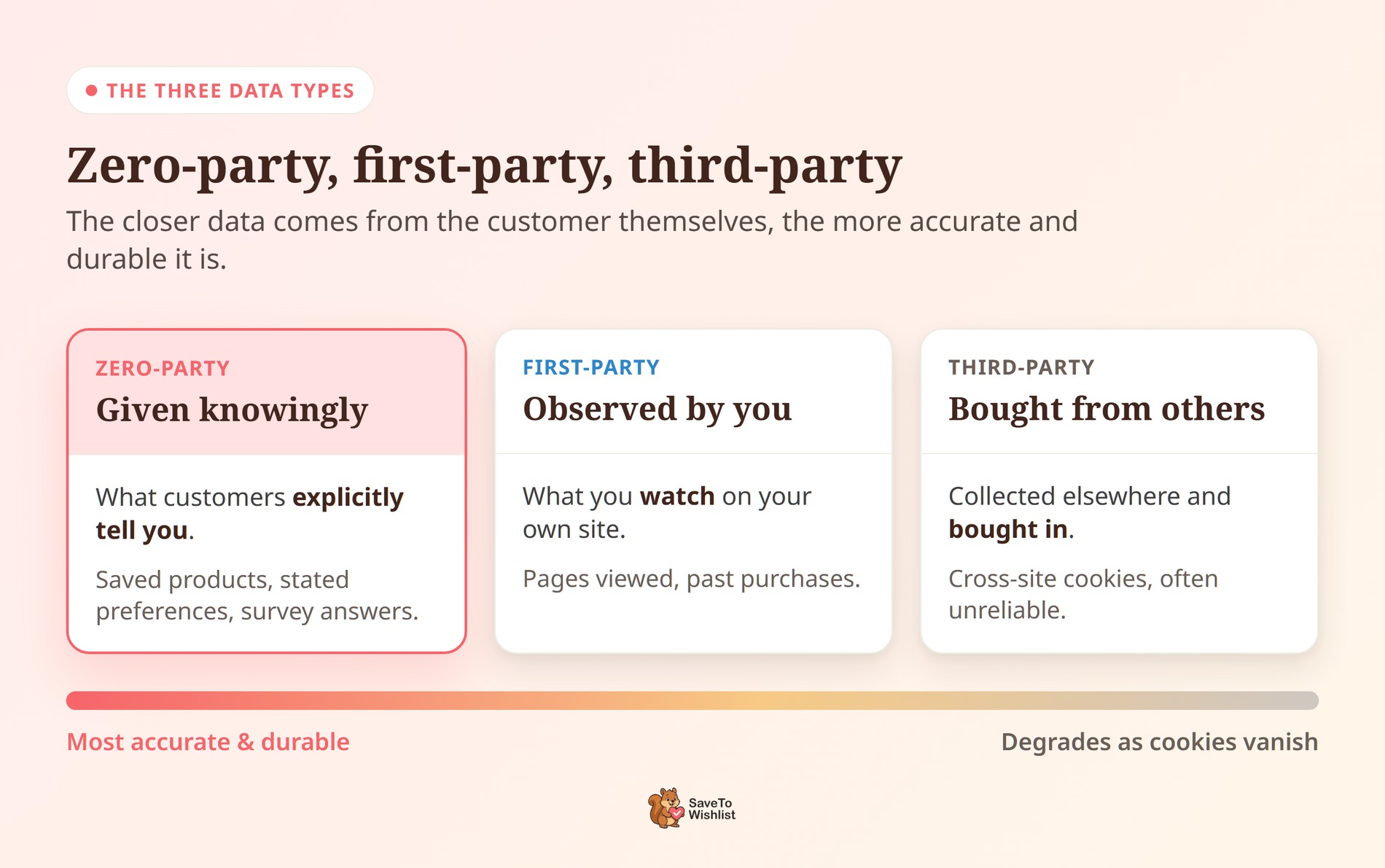
The closer you get to zero-party data, the more accurate and durable it becomes. Since it comes straight from the customer with their full consent, it doesn’t break when cookies disappear, and it doesn’t carry any creepy privacy baggage.
Why Zero-Party Data Matters Now
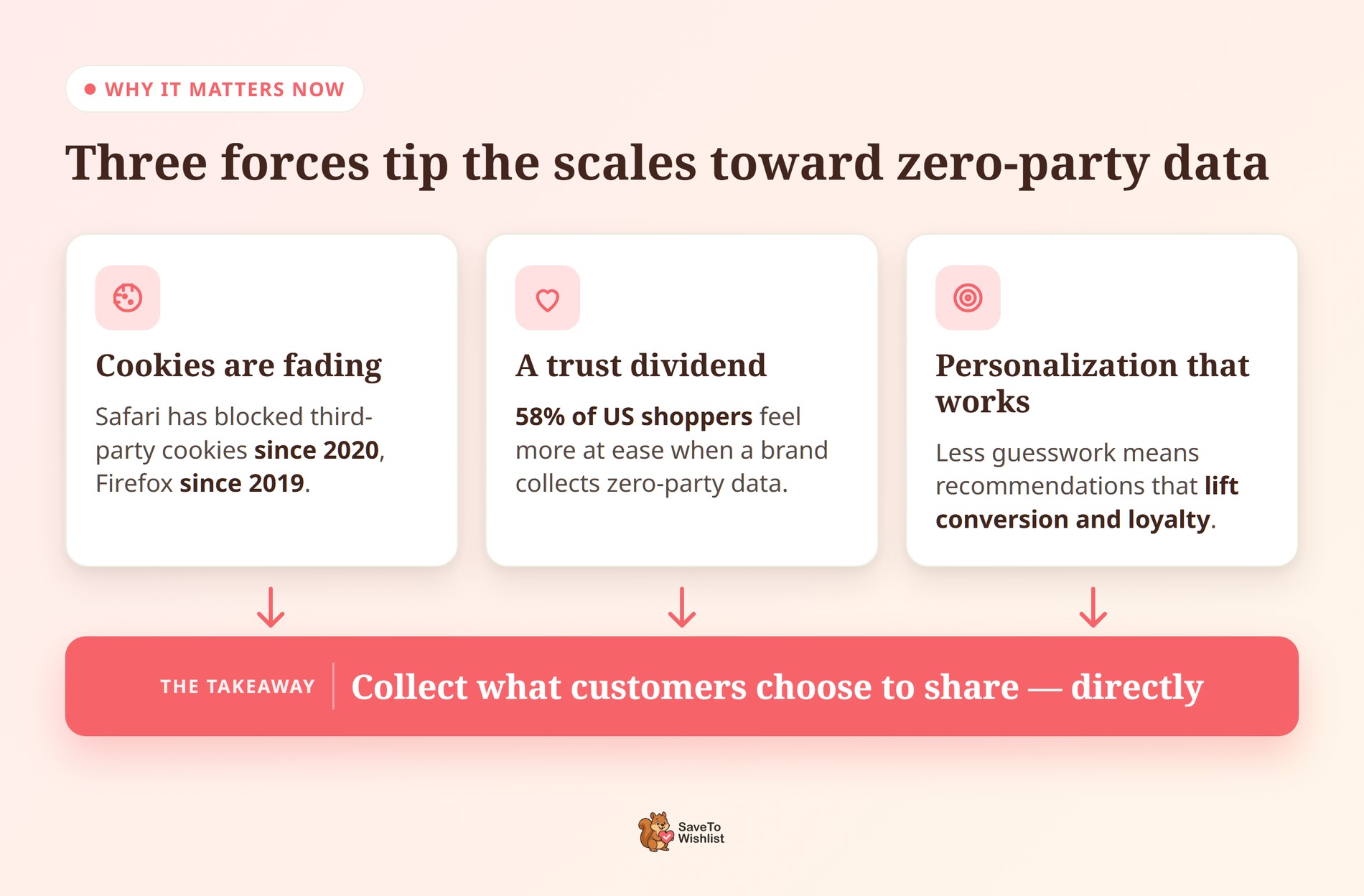
Third-party cookies just aren’t the dependable backbone they used to be. Safari has blocked them by default since 2020, and Firefox since 2019. On top of that, people’s privacy expectations keep rising. That combination makes silent tracking both less reliable and less welcome. The stores that lean entirely on tracking are losing their signal, while the ones collecting data directly are pulling ahead.
There’s a massive trust dividend here, too. In one Statista survey, roughly 58% of US consumers said they’d feel much more at ease on a brand’s website if it collects zero-party data instead of tracking them. Customers want to feel in control of what they share. Asking them openly, rather than tracking them covertly, shows real respect.
The biggest practical upside? Personalization that actually works. When customers literally tell you what they want, your recommendations, emails, and offers hit the mark every single time. It completely removes the guesswork, which naturally lifts both your conversions and your long-term customer loyalty.
Why A Wishlist Is The Cleanest Zero-Party Signal
A wishlist is zero-party data in its absolute purest form. When a shopper saves a product, they’re explicitly telling you, “I really want this.” You don’t have to guess or decode anything; it’s a clear statement of intent.
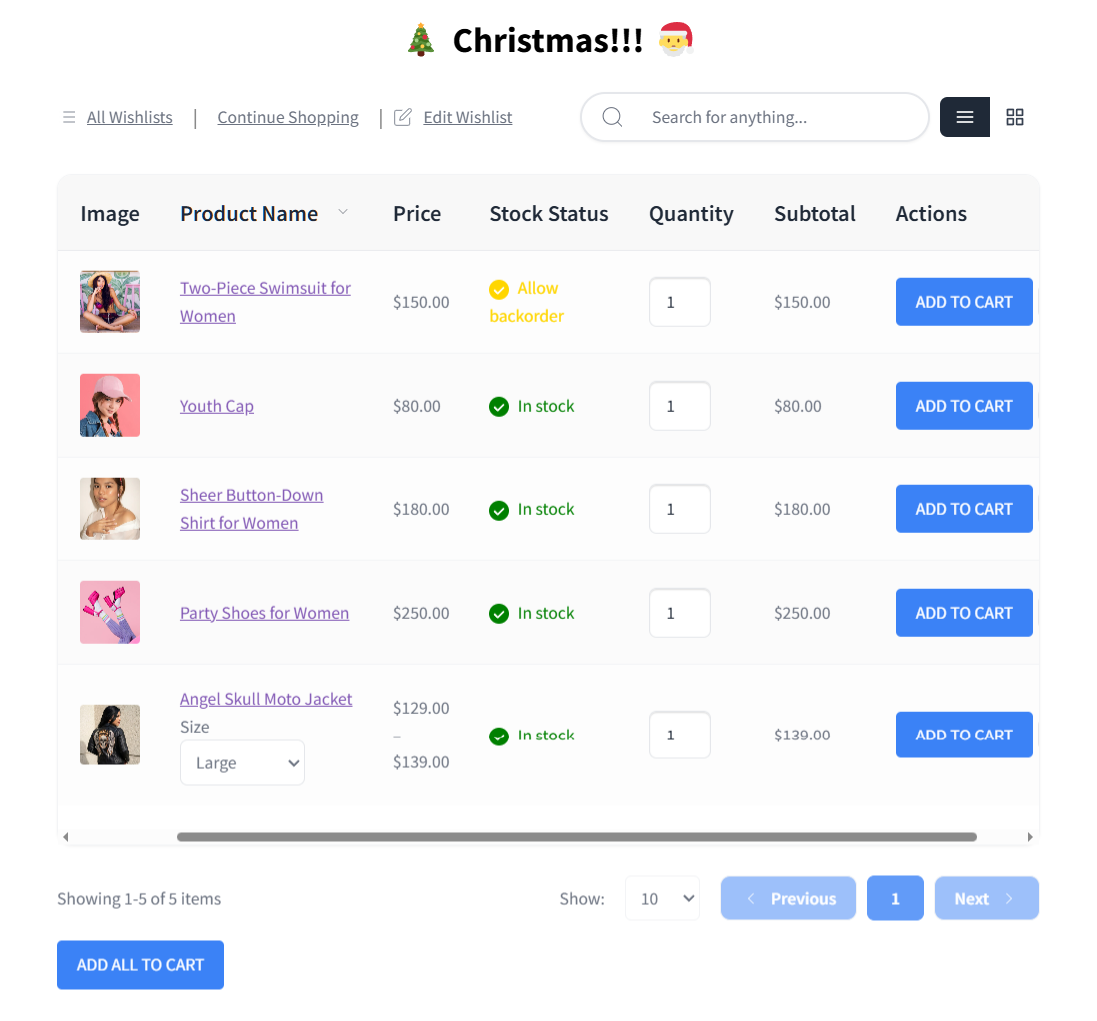
Compare that to behavioral guesswork. A page view might mean a customer is interested, or it might just mean they got lost clicking around your site. A save is completely unambiguous. Plus, the free free WooCommerce wishlist plugin captures these signals as a totally natural part of the shopping experience. Collecting this data doesn’t cost the customer a thing and feels like a helpful feature rather than an intrusive tracker.
🔍️ What we’ve seen: Stores often spend thousands on complicated AI tools just to guess what shoppers might want. Meanwhile, they completely ignore the wishlist sitting right there telling them directly! The “save” is the exact answer every personalization tool is desperately trying to estimate. You should always start with the data your customers are already volunteering.
How To Collect And Use Zero-Party Data In WooCommerce
You don’t need a complex data platform to start. The goal is simple: give your customers an easy, valuable way to tell you what they want, and then actually use that data.
Here’s exactly how to collect it without being pushy:
- Wishlists: Let shoppers save products to signal their intent directly. Don’t just use a boring “Save” button. Use helpful copy like, “Save your favorites and we’ll ping you if the price drops.” This turns data collection into a free, helpful service your customers will actually want to use.
- Preference prompts: Ask what categories or sizes someone cares about, but remember that timing is everything. Don’t hit a brand-new visitor with a massive survey on your homepage. Instead, trigger a quick, one-question popup right after checkout asking, “Who are you shopping for today?” or let them easily click their preferred sizes inside their account dashboard.
- Account choices: Let customers set their own notification preferences. If they only want emails about new product drops and not weekly newsletters, let them choose that. They’ll appreciate the control.
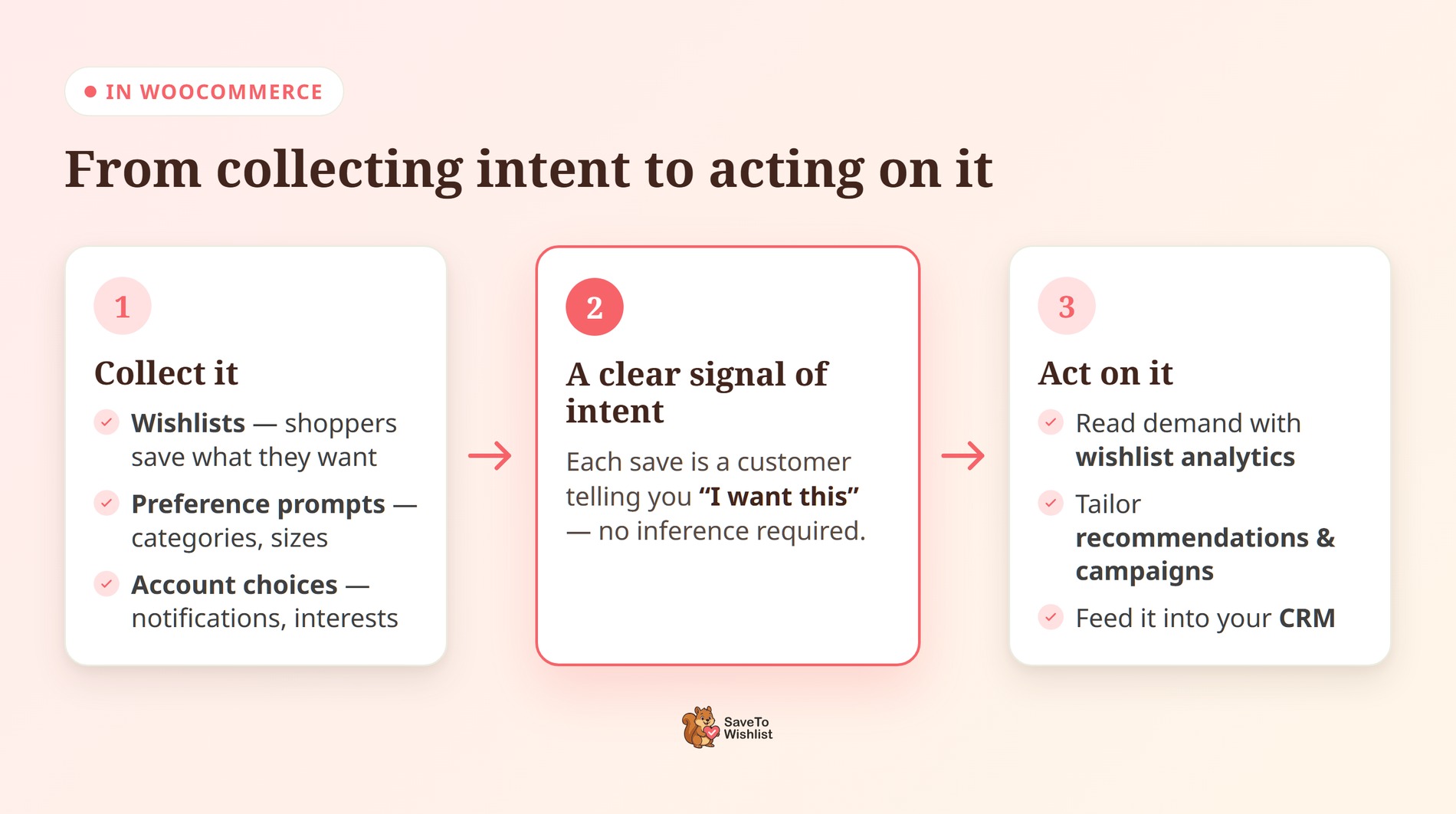
Once you have the data, you actually have to put it to work.
Let’s say a customer tells you their shoe size is a 10, or they only save size 10 sneakers to their wishlist. When you run a clearance sale, don’t blast them with an email highlighting size 7 shoes. Use that zero-party data to send a highly targeted “Here’s what’s on sale in Size 10” email. That lifts both your conversions and your customer loyalty.
SaveTo Wishlist Pro analytics turn this saved-item data into clear insights about what shoppers want most. If you want to feed those signals directly into your customer records, our guide on how wishlist data feeds your WooCommerce CRM goes step by step. Our look at wishlist analytics and customer intent covers reading the signals.
Plus, pairing this data with WooCommerce AI tools like StoreAgent lets you turn that stated intent into tailored shopping experiences.
Handle Zero-Party Data In A Way That Builds Trust
The entire advantage of zero-party data relies on trust, so don’t squander it. Be completely transparent about what you’re collecting and why. Then, actually use it to genuinely improve the customer’s experience rather than just using it to bombard them with spam.
A simple rule works wonders here: only ask for data you’ll actually use, and show the payoff fast.
If a shopper saves an item, the value becomes obvious the second you send them a helpful price-drop alert. If you ask them for a sizing preference, immediately reflect that in what you show them next on your site. When customers see that their input actively makes their shopping experience better, they’ll gladly share more.
Respect their consent and always keep it incredibly easy for them to update their preferences. In practice, this turns a basic data strategy into a long-term customer relationship.
Your Zero-Party Data Checklist
- Capture explicit intent with wishlists, not just behavioral tracking.
- Add light preference prompts where they add value.
- Use wishlist analytics to act on what shoppers tell you.
- Only collect data you’ll genuinely use, and show the payoff fast.
- Keep preferences easy to update and be transparent about use.

Build On Data Customers Choose To Share
As third-party cookies fade in reliability, the winning stores will be the ones customers trust. Those customers tell them exactly what they want. Zero-party data is that foundation. A wishlist is the easiest place to start collecting it, because shoppers are already volunteering the clearest signal there is.
Here’s the short version:
- Understand zero-party data and why it beats inferred tracking.
- Why it matters now that cookies are unreliable.
- Use the wishlist as your cleanest intent signal.
- Collect and use it in a way that builds trust.
Ready to act on what your shoppers actually want? Explore SaveTo Wishlist Pro today and turn saved-item intent into insight!
Frequently Asked Questions
What is zero-party data in simple terms?
Zero-party data is information customers choose to share with you directly. Think the products they save or the preferences they set. Unlike tracked data, it’s given knowingly. That makes it more accurate and far less reliant on cookies.
How is zero-party data different from first-party data?
First-party data is what you observe on your own site, such as pages viewed or past orders. Zero-party data is what customers explicitly tell you, like saving a product or stating a preference. Zero-party is more direct because there’s no inference involved.
Why does zero-party data matter for ecommerce now?
Third-party cookies are far less reliable now, and shoppers expect more privacy. Safari and Firefox block these cookies by default. So inferred tracking is weaker and less welcome. Collecting data customers willingly share keeps your personalization accurate and builds trust.
How do wishlists provide zero-party data?
When a shopper saves a product, they’re explicitly telling you they want it. That’s zero-party data in its clearest form. Wishlists capture that intent as a natural part of shopping, with no tracking required.
Is collecting zero-party data good for customer trust?
Yes, when handled well. Asking openly and using the data to improve the experience signals respect and control. Research has linked that approach to greater consumer comfort with a brand. Only collect what you’ll use, and show the value quickly.