
 Reviewed by
 If you send the same email to every customer, you already know the result: low open rates and more unsubscribes.
Most WooCommerce stores treat their audience as one single list. Because of this, a message built for a bargain hunter lands in the inbox of a loyal buyer who was ready to pay full price.
WooCommerce customer segmentation fixes this by splitting your shoppers into smaller groups so you can send them relevant messages. The catch is that most segmentation relies on past purchases. Purchase history only tells you what someone already did.
Wishlist data tells you what they want next, which is a much stronger starting point. This guide covers how to build simple segments based on shopper behavior. We’ll look at why wishlist data is an accurate signal and how you can act on each group.
Table of Contents
- What WooCommerce Customer Segmentation Actually Means
- Why Wishlist Data Is A Strong Segmentation Signal
- Simple Segments You Can Build From Wishlist Behavior
- How To Build And Export These Segments
- How To Act On Each Segment
- Frequently Asked Questions: WooCommerce Customer Segmentation
- Putting Your Segments To Work
What WooCommerce Customer Segmentation Actually Means

Customer segmentation is simply grouping shoppers into smaller sets based on shared traits or habits. This lets you tailor your marketing to each group instead of sending everyone the same email. A first-time visitor, a repeat buyer, and someone who abandons a cart all need a different message.
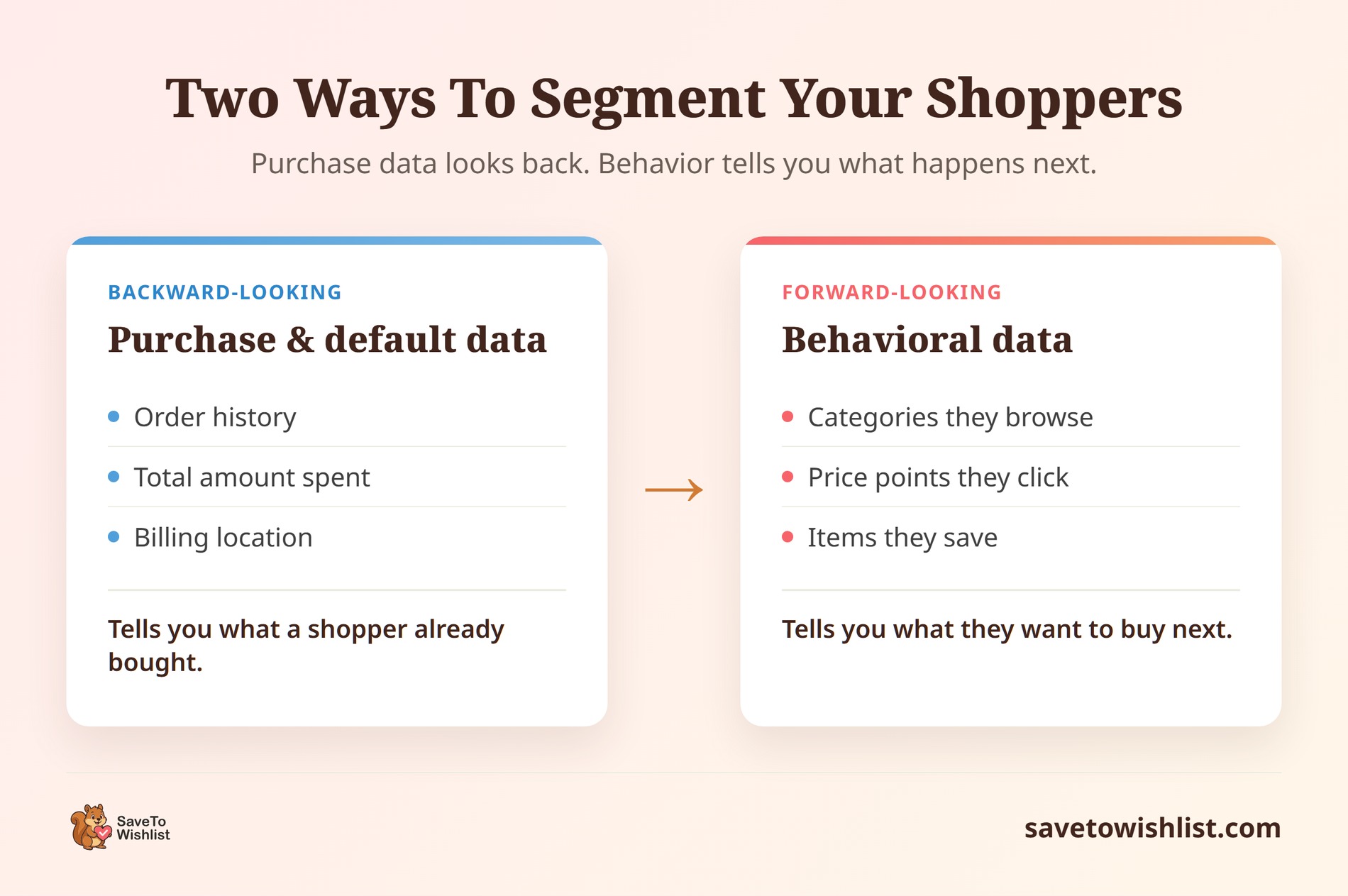
Most stores start with the default data WooCommerce provides: order history, total spend, and location. You can build useful segments from this, like a list of lapsed customers. However, all of this data is backward-looking. It tells you what a customer bought in the past, not what they’re looking at right now.
📝 Note: Wholesale stores segment differently. Wholesale Suite has a full guide to B2B customer segmentation.
Behavioral segmentation goes a step further. It groups people based on what they do while actively browsing your store. This includes the product categories they view, the price points they click, and the specific items they save.
Often, stores spend all their time segmenting people who already made a purchase. Meanwhile, they ignore the much larger group of shoppers who showed clear interest but left before checking out.
Why Wishlist Data Is A Strong Segmentation Signal
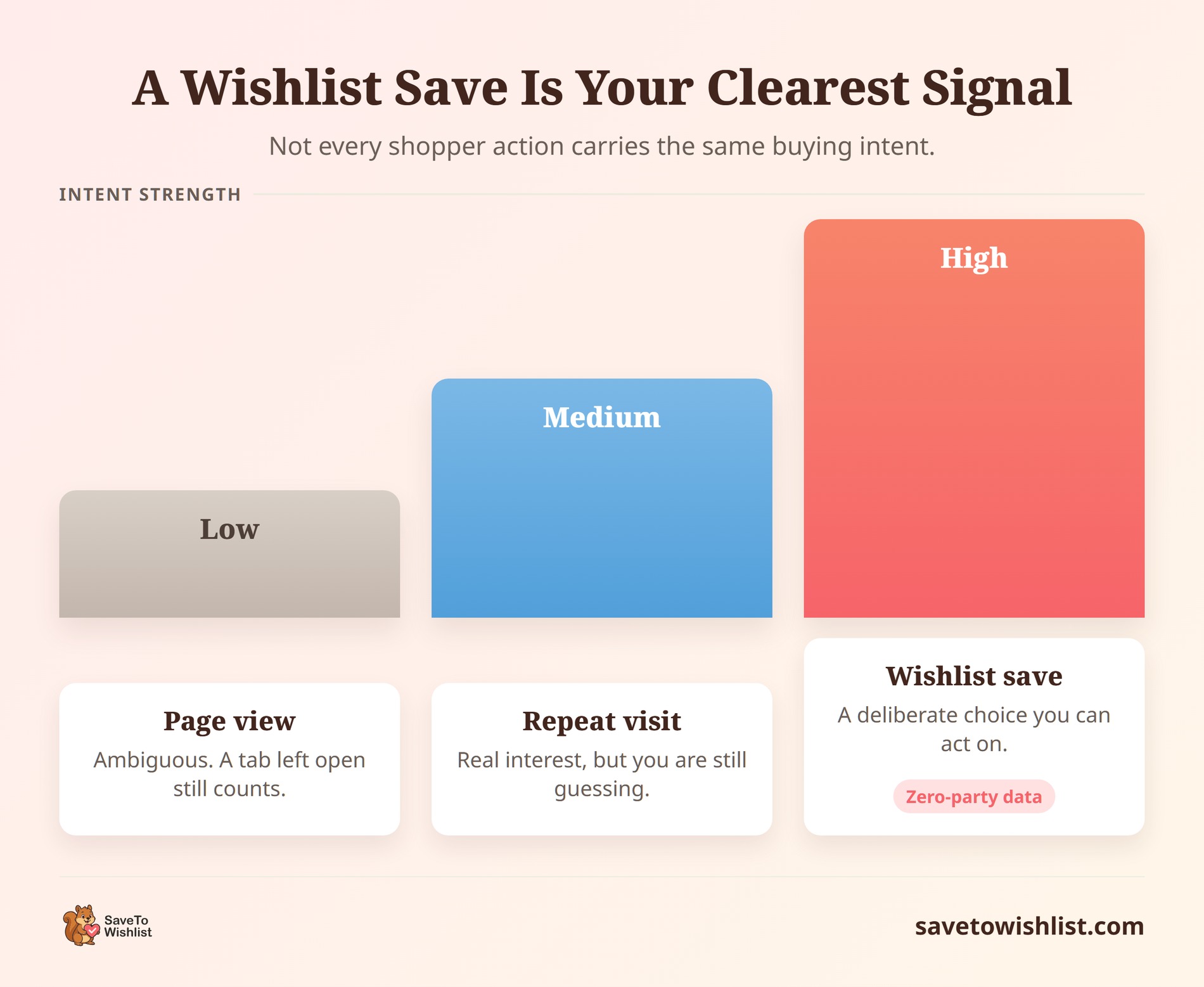
Wishlist data is what the industry calls “zero-party data.” This simply means it’s information a shopper hands to you on purpose. Because they chose to save the item, it’s one of the clearest signals you can use to group your customers.
When someone saves a product to a wishlist, they’re telling you exactly what they want. They just aren’t ready to buy it today. They might be waiting for their next paycheck, comparing your product with another store’s, or hoping for a price drop.
The gap between wanting an item and actually buying it is wide. The Baymard Institute reports that the average cart abandonment rate is over 70%. At the same time, 43% of online shoppers abandon carts simply because they’re just browsing. A wishlist gives all that “not-ready-yet” demand a place to live. Instead of losing those browsers completely, you capture a record of what they want.
Because a wishlist save is a direct action, the groups you build from it are much more accurate than guessing based on page views. If a shopper looks at a product page three times, they might want the item, or they might have just left their browser tab open. But when they click “save to wishlist,” they’re making a clear choice. You now know the exact product they want, the category they care about, and the price range they shop in.
The stores that get the most value from this treat their wishlists as a live database of customer demand. If you already send your past order data to a CRM (Customer Relationship Management tool—the software you use to organize and track your contacts), wishlist data belongs right next to it. We cover exactly how to set this up in our guide to using wishlist data in your WooCommerce CRM.
Simple Segments You Can Build From Wishlist Behavior
You can build highly effective segments from just a few basic wishlist behaviors. You don’t need complicated software to get started. By looking at how people use their saved lists, you can sort them into these five groups:
1. Category shoppers
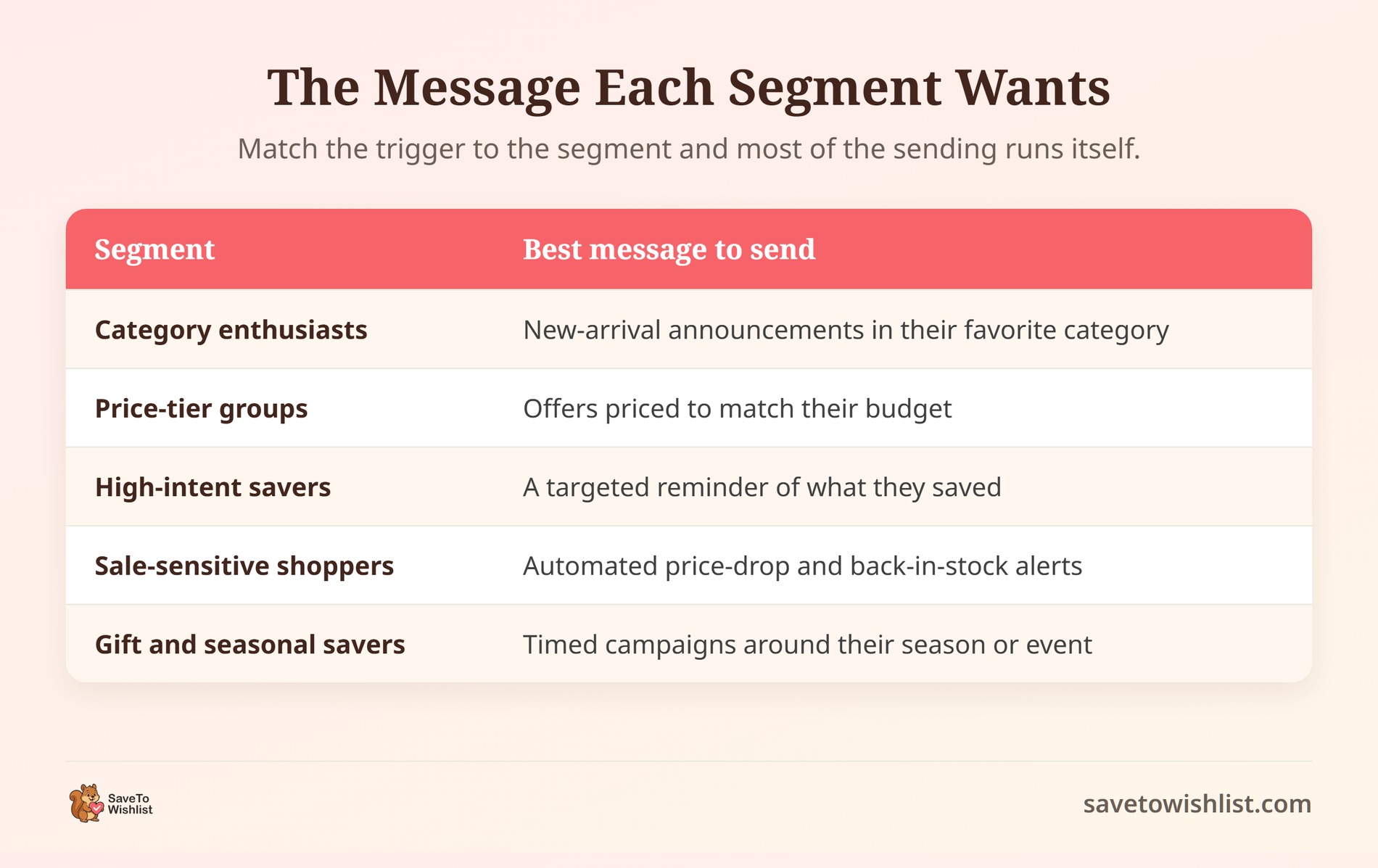
These are shoppers whose saved items all belong to one specific area of your store. For example, if a customer only saves coffee mugs, you shouldn’t send them an email about coffee grinders. You can also spot patterns for refillable items here—if someone consistently saves bags of coffee beans, they might be the perfect audience for WooCommerce subscriptions. When you launch a new product or service, you can send an announcement strictly to the group that focuses on that specific category.
2. Budget-based groups
You can group shoppers by the average price of the items they save. Look at the price tags on a customer’s wishlist. If someone only saves items under $30, sending them a promotion for a $300 premium product won’t work. When you group shoppers by their budget, your offers stay relevant. You can even use a tool like Advanced Coupons to send a specific discount just to the people in a lower-budget group.
3. High-interest savers
These are people who save four or five items in a single afternoon, or who remove and re-save the exact same item. This burst of activity is a strong signal that they’re actively researching and getting ready to check out. They usually don’t need a heavy discount to finish their order. A simple, timed reminder email is often enough to bring them back.
4. Bargain waiters
Some shoppers use wishlists specifically to track prices. They find the exact item they want, save it, and then wait for a sale. Because they’re highly sensitive to price changes, they respond extremely well to automatic “price drop” emails. When you run a clearance event, this group should be the very first one you notify.
5. Seasonal and gift savers
These are shoppers whose wishlist activity spikes right before a major holiday, or people who use your store’s wishlist as a gift registry. Their buying habits are tied to a specific date on the calendar. Once you identify them, you know exactly when to send them a reminder next year.
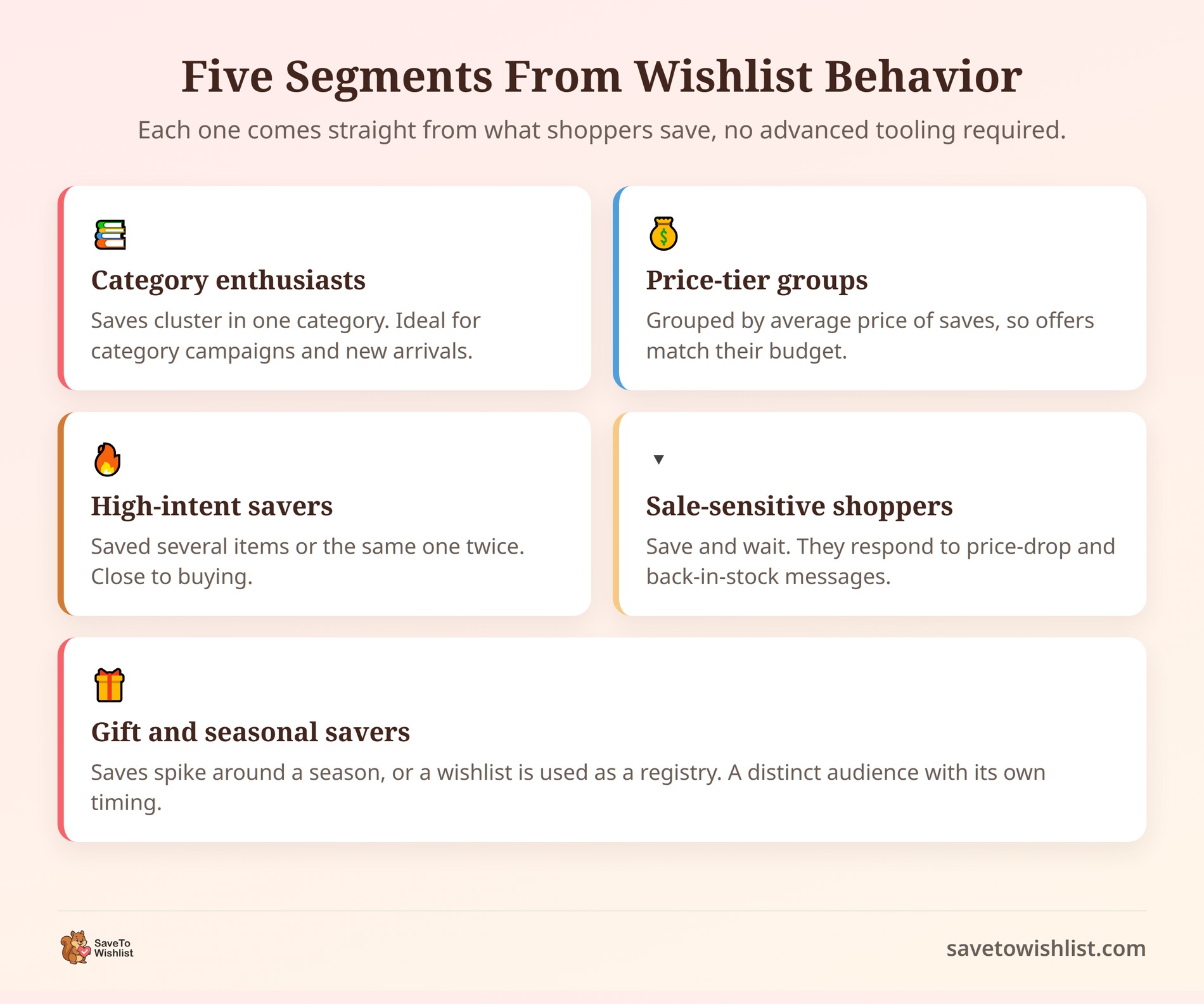
You don’t need to build all five of these groups on day one. Pick the one or two that best match how you already run your store, and add the others later.
How To Build And Export These Segments
In SaveTo Wishlist Pro, you build these groups using two main features: Advanced Analytics and Advanced Filter and Export. Think of analytics as the tool that finds the pattern, and the export tool as the way you grab the actual list of customer emails.
First, Advanced Analytics looks at all the wishlists on your store to show you what’s trending. It highlights which products are popular, which categories people save the most, and how demand changes over time. For example, if you notice that a specific category gets a spike in saves during a certain month, you’ve just spotted a new segment forming. If you want to learn more about reading these reports, we cover it in our advanced wishlist analytics guide.
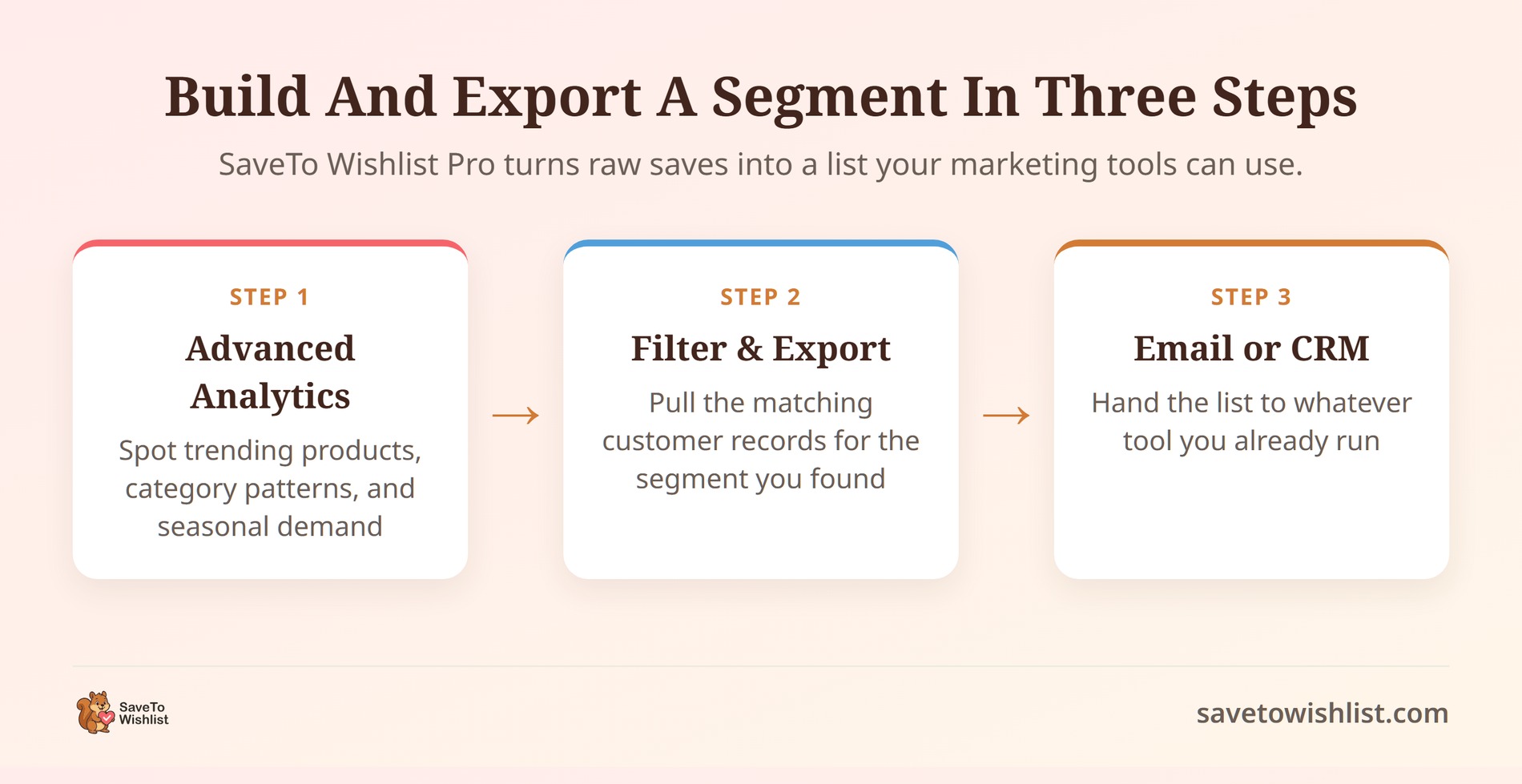
Once you know the exact segment you want to target, use the Advanced Filter and Export tool. This feature lets you sort your wishlist data to match the patterns you just found. Once the data is filtered, you can export (which simply means download) the matching customer records. Now, you have a clean list of shoppers ready to load into your email platform.
For the best results, get into a monthly routine. At the start of each month, open your analytics and find two or three segments that shifted. Filter for those specific shoppers and download the new lists. Building this monthly habit ensures your messaging stays accurate and stops your segments from going stale.
How To Act On Each Segment
Acting on a segment simply means sending that specific group the exact message they want to hear. Instead of emailing people by hand, SaveTo Wishlist Pro lets you handle this automatically using its built-in Automations and webhooks.
Automations are simply rules that pair a “trigger” with an “action.” A trigger is the event that starts the process, like a saved product going on sale or coming back in stock. The action is what happens next, like sending the customer an email.
For example, if you have a segment of bargain waiters, you can set up a price-drop trigger. When an item goes on sale, the system automatically emails the specific people who saved that product. Once you set it up, it runs quietly in the background without you having to lift a finger.
If you want to manage your segments inside a dedicated email platform, webhooks are the bridge you need. A webhook is simply a way for two different apps to send automated messages to each other over the internet.
SaveTo Wishlist Pro doesn’t connect directly to email tools like Klaviyo or Mailchimp. Instead, its webhooks send wishlist events (like when a customer saves a new item) to a middleman tool like Zapier. Zapier catches that data and passes it straight into your email platform. From there, your email tool can use that wishlist data to send targeted campaigns or suggest personalized related products that perfectly match what they already saved.
🔍️ What we’ve seen: The stores that get the best results from segmentation keep things small and consistent. Two or three well-maintained segments that send the right automated emails will easily beat a dozen complicated segments that nobody has time to update. Start small, see what actually works, and only add more segments when you’re ready.
Frequently Asked Questions: WooCommerce Customer Segmentation
What is customer segmentation in WooCommerce?
WooCommerce customer segmentation means grouping shoppers into smaller sets based on shared behavior or traits. You then market to each group differently. In WooCommerce you can segment on order history, spend, and location out of the box.
Behavioral data like the products and categories customers save takes it further. The payoff is relevance: the right message reaches the right group, not one generic blast.
Is wishlist data better than purchase history for segmentation?
They answer different questions, so the best segmentation uses both. Purchase history tells you what a customer already bought, useful for reorder and loyalty campaigns. Wishlist data tells you what they want next, which is better for reaching people before they buy. Because a saved item is a deliberate choice, it tends to be a cleaner intent signal than inferred browsing.
Do I need SaveTo Wishlist Pro to segment customers?
You can start segmenting with basic WooCommerce data for free, but wishlist-based segments need the Pro tier. The free version lets shoppers create and save wishlists. Advanced Analytics and Advanced Filter and Export, the tools that find and pull segments, are Pro features. If you plan to segment on saved products, categories, or price tiers, Pro is what makes that data usable.
Can I send segmented emails through Klaviyo or Mailchimp?
Yes, through a connector rather than a direct integration. SaveTo Wishlist doesn’t connect to Klaviyo or Mailchimp natively. Its real-time webhooks send wishlist events to a tool like Zapier, which passes the data to your email platform. From there you build the campaign in your tool of choice.
How often should I update my segments?
A monthly refresh works well for most stores. Wishlist behavior shifts with seasons, new products, and promotions. A segment built months ago can drift out of date and target the wrong people. Open Advanced Analytics at the start of each month, note what changed, and re-export your key segments. That keeps them accurate without much effort.

Putting Your Segments To Work
The quickest way to make WooCommerce customer segmentation work for your store is to keep things simple. Use the data you already have, and get into a routine of updating your lists on a schedule. Wishlist data gives you a clear advantage because it tells you exactly what your shoppers want before they actually check out.
Here’s a quick recap of the steps we covered in this guide:
- Understand what segmentation is: Stop sending the same email to everyone, and start grouping shoppers by their habits instead.
- Use wishlist data as your guide: Treat saved items as a clear signal of what a customer actually plans to buy next.
- Build simple segments: Group people by the categories they browse, the budgets they stick to, or how they wait for sales.
- Pull your lists: Use analytics tools to spot buying trends, and use export tools to download the exact group of customers you want to reach.
- Act on your data: Send each segment the specific message they care about, using automated triggers so you don’t have to do it by hand.
If you’re ready to turn your saved products into groups you can actually market to, SaveTo Wishlist Pro gives you the exact tools you need. You get the analytics to spot trends, the filters to pull your lists, and the automation tools to send messages, all without having to build a complex system from scratch.
Don’t try to build every segment on day one. Start with just one or two groups, see how they respond, and slowly grow your strategy from there.