
 Reviewed by
 If you’re spending most of your marketing budget chasing new customers, your WooCommerce store might be leaking money. Every new sale keeps getting more expensive to win, while ad costs climb. Meanwhile, the buyers you already have often purchase once and vanish.
Customer lifetime value is the total revenue one shopper brings you across the whole relationship. For a lot of stores, that number stays low. The fix isn’t more traffic. It’s getting the customers you already have to come back and spend more.
Wishlists are one of the quieter tools for doing exactly that. A saved item tells you what a shopper wants next. This guide walks through how wishlists lift customer lifetime value in practice.
Table of Contents
What Customer Lifetime Value Actually Means
Customer lifetime value (CLV) is the total profit you earn from one customer across their entire relationship with your store. It tracks them from their very first order all the way to their last. In short, it answers one massive question: how much is a single shopper actually worth over time?

You don’t need to be a data scientist to calculate customer lifetime value. Here’s the basic formula to use:
CLV = AOV x Purchase Frequency x Customer Lifespan
Take your average order value (AOV), multiply it by how often a customer buys each year, and then multiply that by the number of years they stick around.
For example, if a customer averages $60 per order, buys from you three times a year, and stays loyal to your brand for two years, their lifetime value lands at $360.
That $360 matters way more than tracking a single $60 checkout. It tells you exactly how much you can afford to spend on ads to win—and keep—each buyer. Once you understand this number, it completely changes how you run your store. Instead of frantically chasing one-time conversions, you’ll start focusing on what actually makes people come back.
Even a slight nudge upward in your repeat purchase rate or order frequency adds up fast, easily beating out a fresh, expensive burst of new ad traffic!
Why Lifetime Value Beats Chasing New Buyers
If you’re wondering why you should obsess over customer lifetime value, here’s the harsh truth: keeping an existing customer is almost always cheaper than winning a brand-new one. You’ve already paid the ad platforms to acquire them. Every repeat order carries zero acquisition cost, and existing customers spend way more freely once they already trust your brand.
There’s also a massive timing problem with relying purely on new visitors. According to the Baymard Institute, roughly 70% of online carts are abandoned. On top of that, 43% of shoppers walk away from their carts for one simple reason: they were just window shopping and weren’t quite ready to buy yet.
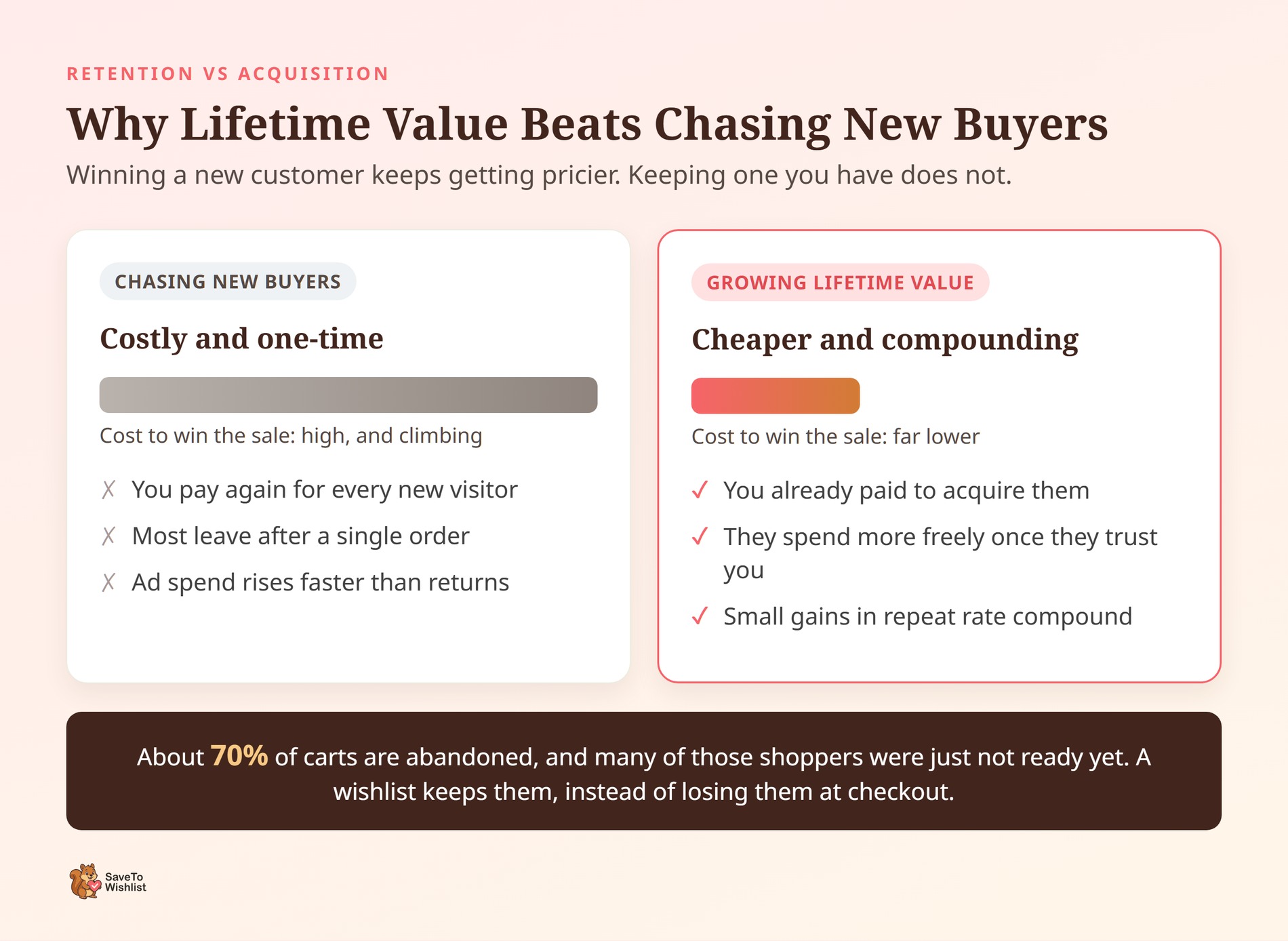
Pouring more and more ad spend onto that cold traffic doesn’t fix the core issue. The reality is that most buyers need way more than one visit before they actually commit.
This is exactly where a retention mindset pays off. When you give browsers a way to save what caught their eye, you can easily bring them back at the absolute perfect moment. It converts intent that would have otherwise completely evaporated. Tons of store owners treat every single abandoned session as a lost cause. In reality? Those shoppers just needed a smart, well-timed reminder to return, which is exactly the kind of touchpoint that will positively impact customer lifetime.
The Three Pillars of Customer Retention
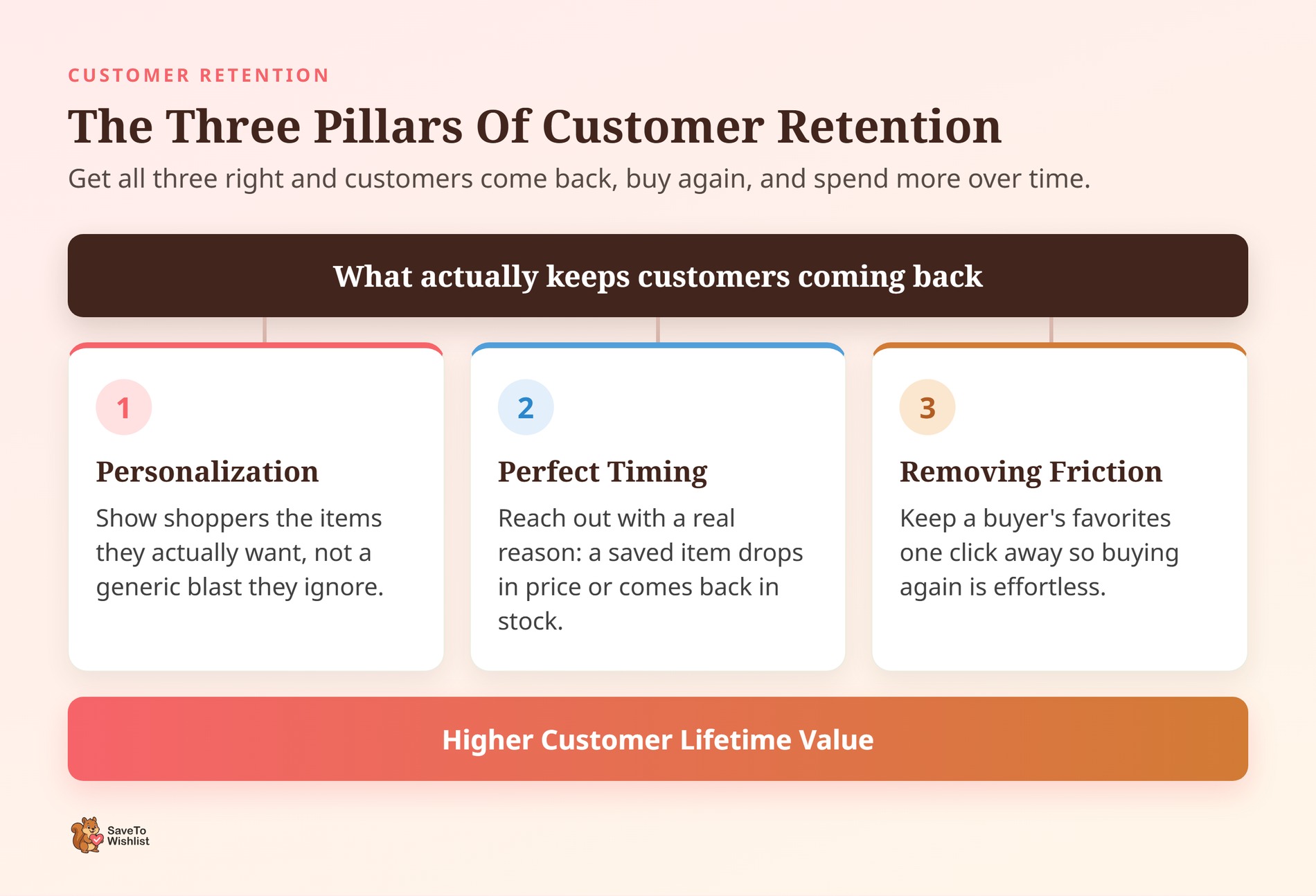
Before you can get customers to come back and spend more, you have to actually understand what makes them stay. Lifting your customer lifetime value usually comes down to mastering three core pillars:
- Personalization: People want to feel like you actually get their tastes. If you blast them with a generic email about a product they don’t care about, they’ll just hit delete. You have to show them exactly what they want to buy.
- Perfect Timing: Reaching out at the wrong time is a total waste of effort. You need a highly valid, exciting reason to slide into their inbox, like when a product they’ve been eyeing drops in price or finally comes back in stock.
- Removing Friction: A smooth customer experience is essential, meaning buying again needs to be incredibly seamless. If a shopper has to dig through your entire catalog to find that one specific jacket they liked last month, they’re just going to give up and bounce.
Trying to hit all three of these pillars manually for every single customer is completely exhausting. That’s exactly why smart store owners rely on one specific tool to do all the heavy lifting: the wishlist.
A wishlist naturally personalizes the shopping experience, helps you time your outreach perfectly, and keeps a buyer’s absolute favorite items just one click away. Here’s how it actually works in practice.
How Wishlists Lift Customer Lifetime Value
Wishlists lift your customer lifetime value by capturing exactly what a shopper wants and giving you the perfect excuse to invite them back. Instead of blindly guessing what your audience wants to buy next, you get to use their saved items as a literal cheat sheet for repeat sales.
Here’s exactly how you turn that wishlist data into a high-converting retention strategy:
1. Turn passive browsing into active buying
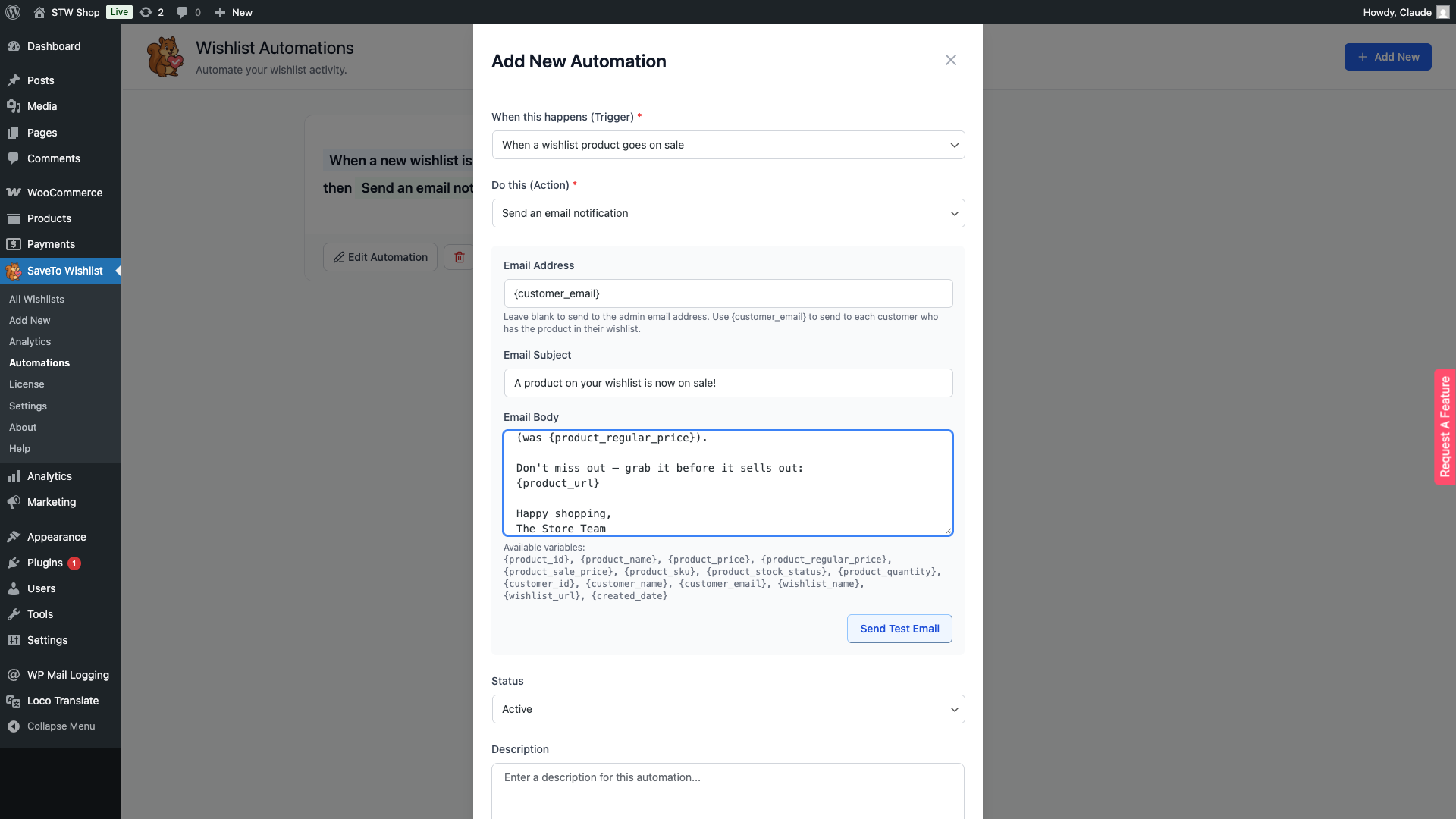
With a tool like SaveTo Wishlist Pro, you don’t have to cross your fingers and hope a browser eventually comes back. You can set up automated price-drop and back-in-stock alerts to do the heavy lifting for you.
Let’s say a customer saves a $100 jacket but leaves your site. Weeks later, when you run a promotion, they automatically get an email letting them know their jacket is finally on sale.
Because it’s an item they actively saved, it doesn’t feel like spam. On the contrary, it feels like a highly personalized, VIP update. That simple alert turns a “maybe later” into a fast, repeat purchase, which is a proven way to steadily increase customer lifetime and overall store revenue.
2. Build smarter product bundles
Don’t just look at what’s selling right now. Look at what your customers are saving together.
If your wishlist analytics show that customers frequently save a specific coffee mug right alongside a bag of espresso beans, group them together into a single “Coffee Lover’s Bundle.” But don’t just guess at the price—use the 10% to 15% Rule. Offer a strict 10% to 15% discount on the bundled items. It’s exactly enough of a deal to make the upsell an absolute no-brainer for the customer, without crushing your profit margins on the repeat sale.
3. Take the guesswork out of your newsletters
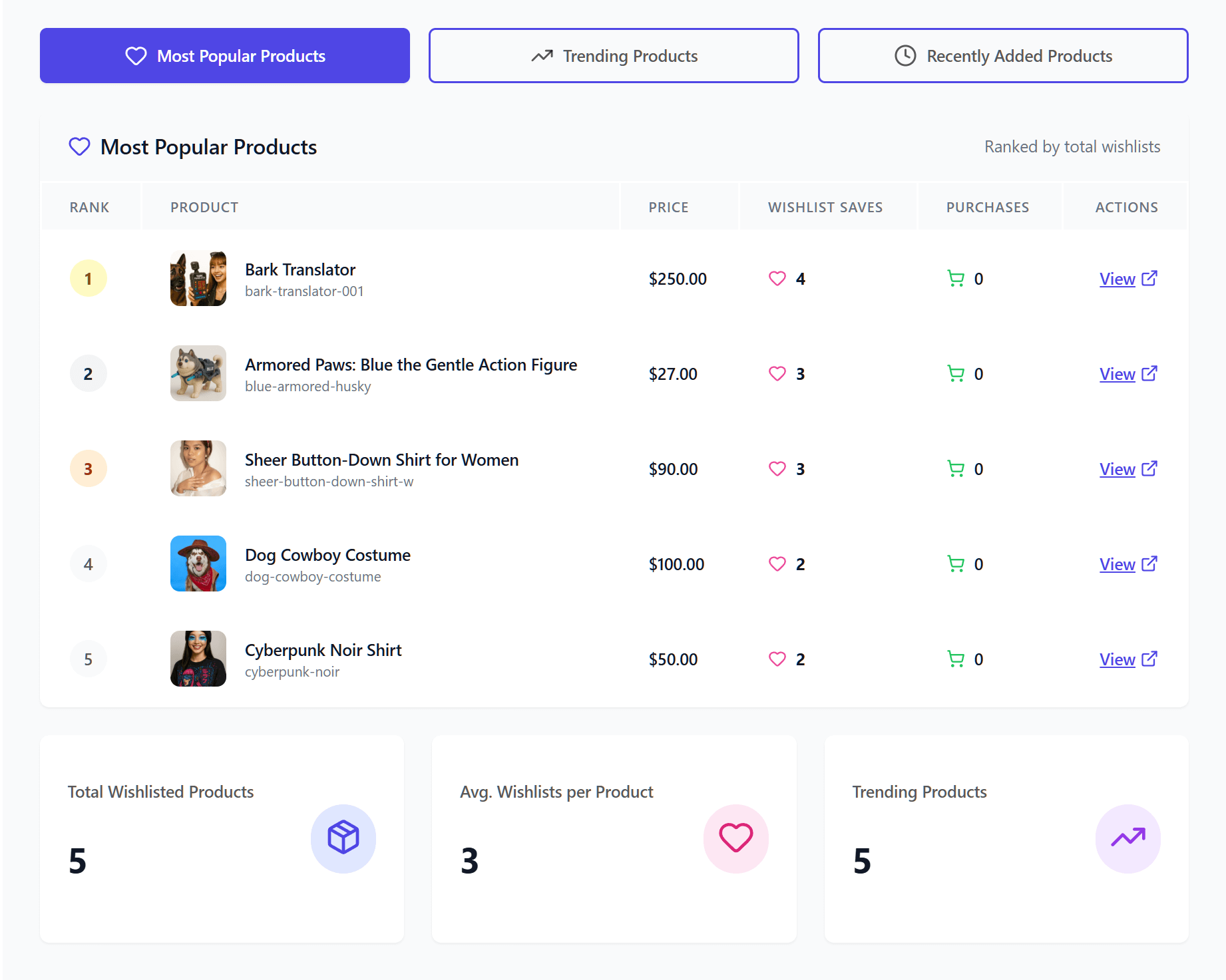
Staring at a blank email campaign trying to guess what products to feature is a massive waste of time. Your wishlist data tells you exactly what’s trending right this second.
Don’t just look for vague “trends,” though. Open your SaveTo Wishlist dashboard and filter for products with 10 or more saves in the last 14 days. When you highlight those exact, high-intent products in your monthly newsletter, you guarantee your email is showing people exactly what they’re already itching to buy. That naturally leads to higher open rates, way more clicks, and a surge in repeat buyers.

🔍️ What we’ve seen: ️Stores that treat wishlist saves as a concrete demand list plan much smarter. They build their restocks and promotions around real intent, not guesswork. The products quietly piling up in wishlists are rarely the ones the store owner originally planned to promote. SaveTo Wishlist Pro supplies this exact data, and you just decide how to act on it—whether that’s a targeted offer, a quick restock, or a simple email reminder.
Practical Levers You Can Pull This Month
The absolute fastest way to improve customer lifetime value is to turn all that saved intent into repeat orders. Better yet, you can do this without spending a single extra dime on ads. Here are four highly practical strategies you can set up right now:
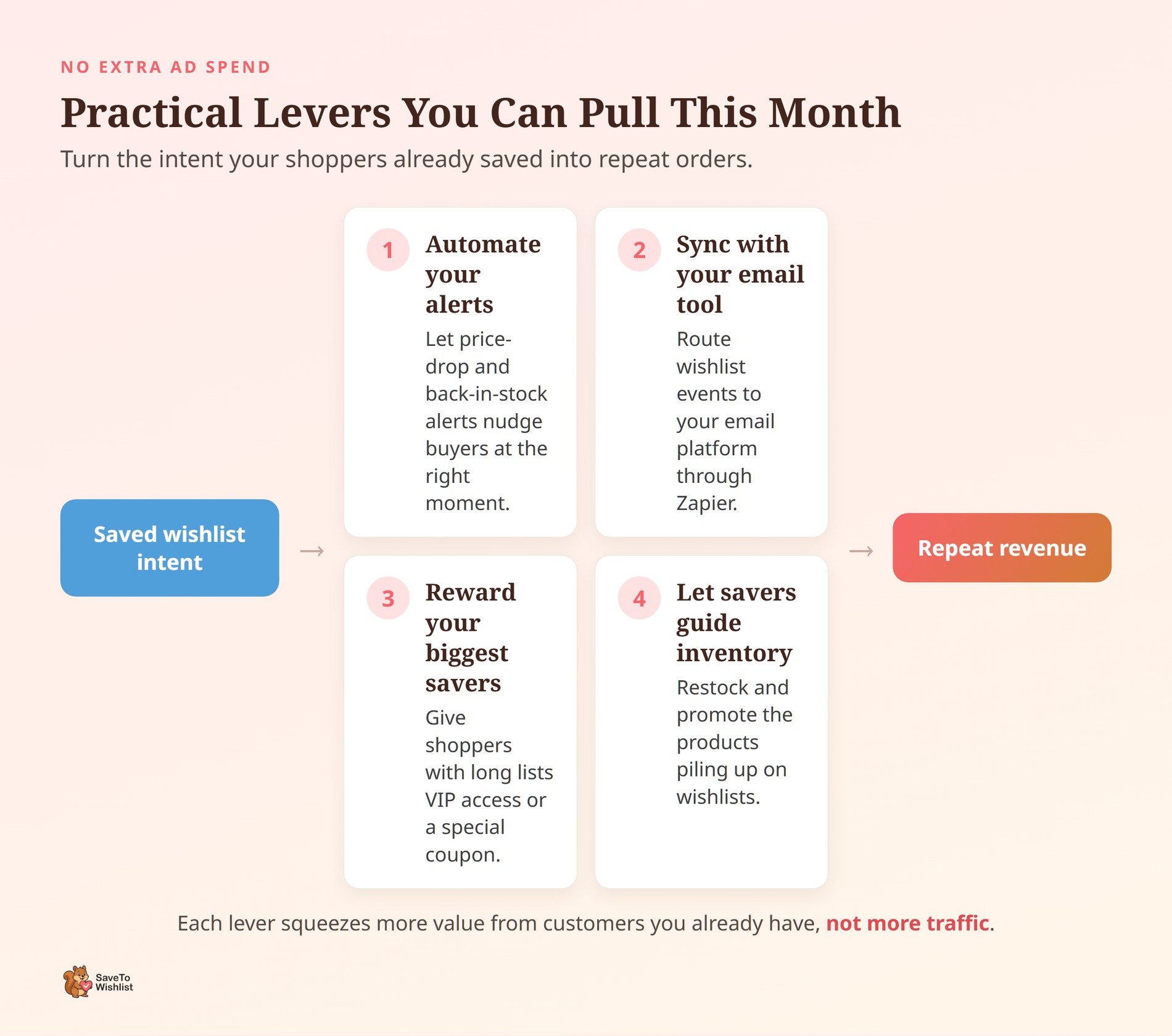
1. Set your alerts on autopilot
The easiest win is to let your wishlist plugin do the major work for you. However, you need to set boundaries so you don’t accidentally annoy your subscribers.
Turn on your price-drop and back-in-stock alerts inside SaveTo Wishlist Pro, but make sure you apply the 10% Trigger Rule. Set your automations so that price-drop emails only fire when a saved item is discounted by 10% or more. After all, nobody wants an inbox alert telling them a $50 shirt is now $49.
When you set a meaningful threshold, your system automatically nudges customers at the exact moment they’re most likely to buy. Therefore, you ensure your alerts always feel like a VIP perk rather than spam.
2. Sync your wishlists with your email tool
Don’t leave your valuable wishlist data stuck in your WooCommerce dashboard. You can use a tool like Zapier to connect SaveTo Wishlist Pro directly to your email platform (like Klaviyo or Mailchimp) so you can trigger personalized campaigns based on what your customers are saving.
But whatever you do, don’t fire off an email the exact second a customer saves an item. It comes across as incredibly creepy and pushy!
Instead, apply the 24-Hour Delay Rule. Set your automation to wait a full 24 to 48 hours before sending a casual, “Still thinking about this?” reminder. This gives the shopper space to breathe, keeps your store top-of-mind, and ensures your outreach feels genuinely helpful rather than desperate.
3. Reward your biggest savers
A great loyalty program shouldn’t just reward the people who spend the most money right now. It should also reward the people who actively interact with your store the most.
If you notice a customer has saved five or more items to their list, they aren’t just window shopping—they are highly invested in your catalog. Use the Rule of 5: whenever someone hits that five-item threshold, don’t wait for them to pull the trigger organically. Surprise them!
Send them a VIP “Early Access” pass to your next big sale, or drop a special 15% off coupon in their inbox just for them. It makes them feel incredibly valued, builds serious brand loyalty, and practically guarantees they’ll come back to complete those orders.
4. Let your customers guide your inventory
Make it a habit to check your wishlist analytics on the first of every month. But don’t just passively look at the numbers—apply the Monthly Audit Rule.
If you see a specific out-of-stock or low-stock product suddenly piling up with 20 or more saves, that is your immediate green light to prioritize restocking it. And once that fresh inventory finally hits your warehouse, don’t just quietly update your website. Run a highly targeted “We heard you!” email promotion sent exclusively to the people who saved it.
This skips the guesswork and drives a fast, predictable burst of repeat sales from the exact shoppers who already explicitly told you what they wanted to buy.
Frequently Asked Questions: Customer Lifetime Value
What is a good customer lifetime value for a WooCommerce store?
There’s no single benchmark, since it depends on your margins and average order value. A better approach is to measure your own number today. Then track whether it trends up over time. If repeat purchase rate and order frequency climb quarter over quarter, you’re heading the right way.
How do wishlists actually increase repeat purchases?
Wishlists capture products a shopper wants but didn’t buy. That gives you natural reasons to reach back out. When a saved item drops in price or returns to stock, SaveTo Wishlist Pro can alert that customer automatically. Those alerts land at moments of real intent, so they convert better than generic promotions.
Does SaveTo Wishlist integrate with my email marketing tool?
SaveTo Wishlist Pro doesn’t send email campaigns itself. It also has no native Klaviyo or Mailchimp connection. Instead, it fires real-time webhooks and automation triggers. You route those through Zapier or Make to your email platform, so wishlist events can drive the campaign.
Can I see which products customers want most?
Yes. SaveTo Wishlist Pro’s Advanced Analytics surfaces trending products. It also shows category and seasonal saving patterns. That gives you a live view of demand straight from your customers, which helps you plan restocks and time promotions.
Is lifetime value only worth tracking for big stores?
No, smaller stores often benefit most. They can’t outspend larger competitors on acquisition. So focusing on lifetime value means getting more from each customer you worked hard to win. Wishlist-driven return visits are a low-cost way to grow revenue without a bigger ad budget.
How do I calculate this metric accurately?
While the basic math involves multiplying your average order value by purchase frequency and customer lifespan, the exact customer lifetime value formula you use can get more complex once you factor in your specific profit margins and operating costs.
What makes tracking lifetime value important for new businesses?
New stores often focus solely on their first few sales, but understanding what makes customer lifetime value important early on can save you from spending too much on ads. It tells you exactly how much you can afford to spend to acquire a buyer while still turning a healthy profit.

Where To Start With Customer Lifetime Value
Lifting customer lifetime value comes down to two things. Keep the customers you already have, and give them clear reasons to return. Wishlists make both easier. Here’s the quick recap:
- What customer lifetime value actually means and how to calculate it
- Why lifetime value beats chasing new buyers on cost and intent
- How wishlists lift customer lifetime value through alerts and analytics
- Practical levers you can pull this month without more ad spend
Pick one lever and set it up this week. Turn on price-drop and back-in-stock alerts, then start reading your wishlist analytics. Within days, you’ll have real return triggers and demand data working for you. That’s what quietly moves lifetime value over time.
When you’re ready to put the analytics, alerts, and automations to work, take a look at SaveTo Wishlist Pro. Start turning saved intent into repeat revenue.