
 Reviewed by
 Most WooCommerce stores chase new customers far harder than they reward the ones who already love them. An ecommerce loyalty program fixes that. It gives repeat shoppers a reason to keep choosing you, instead of drifting to whoever is cheapest this week.
The hard part isn’t the rewards themselves. It’s knowing who to reward and why. That’s where your wishlist data quietly does the work.
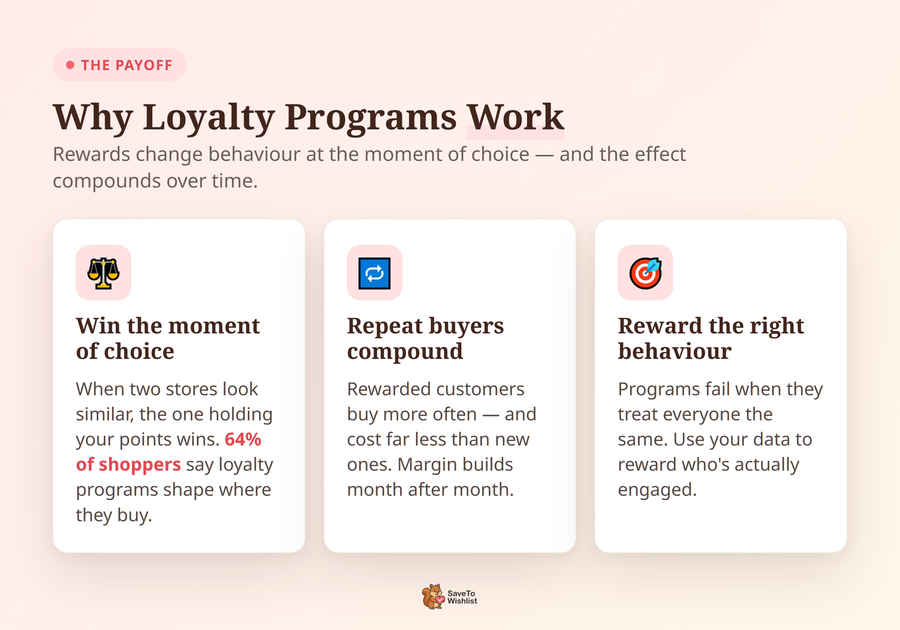
Loyalty isn’t a soft, feel-good metric either. Forrester’s 2024 research found that 64% of US online adults say loyalty programs influence where they buy. So a program shapes where people choose to shop, not just how they feel about you.
In our experience, the most loyal customers leave clear signals long before they become regulars. This guide walks through how to build a loyalty program in WooCommerce. It also shows how to use wishlist data to find the customers worth rewarding first.
Table Of Contents
What Is An Ecommerce Loyalty Program?
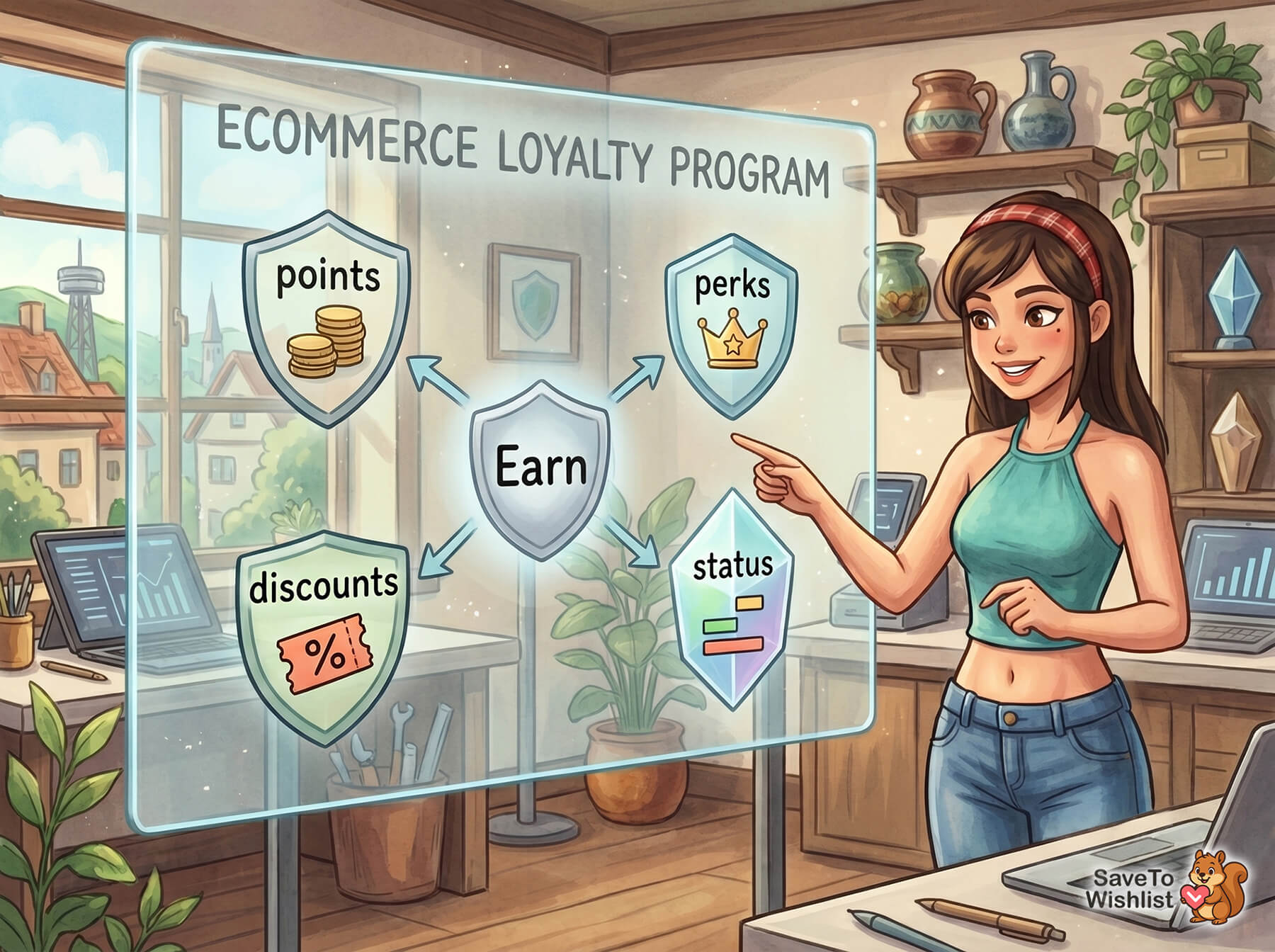
An ecommerce loyalty program is a structured system that rewards customers for repeat purchases and engagement. Shoppers earn points, perks, discounts, or status as they buy and interact. That gives them a reason to return rather than shop around.
The goal isn’t to bribe people into one more order. Instead, it’s to make staying with you the easy, rewarding choice over time. A good program turns occasional buyers into regulars. In turn, regulars become advocates who bring friends.
For WooCommerce stores, a loyalty program also adds structure to something you’re probably already doing informally. That might be thanking repeat buyers or sending the odd discount. It just makes the effort consistent and measurable.
Why Loyalty Programs Work
Effective ecommerce loyalty programs work because they change behavior at the moment of choice. When two stores sell a similar product, the one where a shopper has points or status usually wins. That’s reflected in the Forrester data above. A majority of online adults say loyalty programs influence where they buy.
There’s also a compounding effect. Basically, a rewarded customer buys more often. Furthermore, each repeat purchase costs you far less than acquiring a brand-new shopper. Over months, that gap is where real margin builds.
The programs that fail usually do so for one reason: they reward everyone the same way and ignore who’s actually engaged. The fix is to know your customers well enough to reward the right behavior. That starts with data.
6 Steps To Building Your WooCommerce Loyalty Program
Starting a loyalty program from scratch might seem hard, but having a clear plan makes it simple and effective. Instead of guessing what your shoppers want, you can use your store’s data to reach the right customers and offer them real value.
Follow these six steps to build and improve a rewards system that turns one-time buyers into loyal fans.
1. Choose your loyalty program type
Pick the structure that naturally matches how people already buy from you. When you look at the most successful ecommerce loyalty programs, they usually fall into one of three buckets:
- Points programs: Customers earn points per purchase to redeem later. This is best for stores with high-frequency, repeat purchases (like coffee or skincare).
- Tiered programs: Shoppers unlock much better perks as they spend more over time. This works best for stores with a wider range of customer value and higher-priced items.
- VIP or membership programs: A very select group gets exclusive benefits, early access, or real status. This is perfect for rewarding your most highly engaged customers specifically.
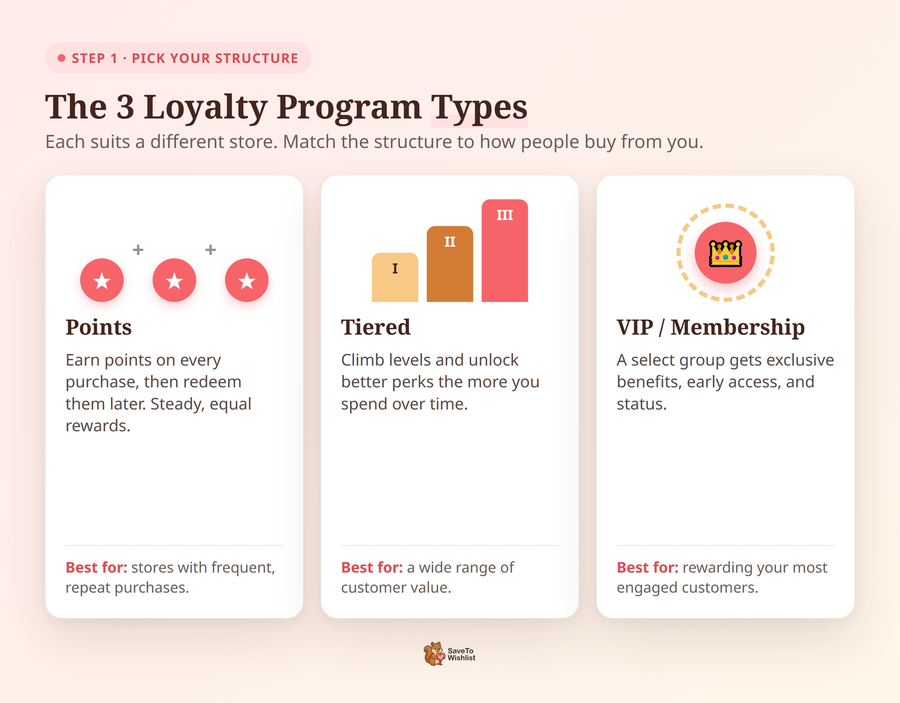
You don’t have to pick just one! In practice, a lot of stores run a basic points program with a VIP tier stacked on top for their absolute best customers. Start simple, then layer on the complexity once the basics are actually working.
How it works: Look at your average customer lifecycle. If they buy small items frequently, set up a points program. If they make rare but expensive purchases, build a tiered or VIP program.
2. Pick rewards customers actually want
A loyalty program lives or dies on its rewards. Points that unlock something boring won’t change your customers’ behavior, but you also can’t afford to give away the farm.
To protect your profit margins, stick to the 3% to 5% Rule. Set your program up so that if a customer spends $100, they earn roughly $3 to $5 in store credit. It’s generous enough to actually bring them back, but safe enough to protect your bottom line.
Strong options include store credit, free shipping, early access to sales, and members-only products. The best mix depends on your store, so test a couple of options and watch which ones actually drive repeat orders.
🔍️ What we’ve seen: The most common loyalty mistake is rewarding the sign-up instead of the actual behavior. Giving everyone a massive welcome bonus and then going quiet just trains people to grab the freebie and leave. Tie your rewards to repeat actions instead, so the program actually builds the habit you want.
How it works: Calculate your profit margins and set your reward value using the 3% to 5% Rule. Then, launch with a mix of direct discounts and experiential perks (like early access) to see what gets your customers clicking.
3. Find your most loyal customers with wishlist data
You can’t reward loyalty if you can’t see it. Before you officially launch your program, you need to find the shoppers who are already highly engaged with your store. They’re the ones who are most likely to actually jump on board and use your rewards.
This is exactly where your wishlist data does the heavy lifting. SaveTo Wishlist Pro analytics show you exactly which products are most wishlisted and, more importantly, which customers are the most active.
Don’t just look for vague “engagement,” though. Look for a concrete threshold. Filter your dashboard for shoppers who have saved 5 or more items in the last 30 days. These hyper-active savers are your absolute loyalty front-runners. They often reveal their high intent long before they’ve made enough purchases to show up in a standard sales report.
Feeding those exact signals into your customer records gives you a clear, targeted shortlist of who to invite first.
📝 Note: We cover that exact handoff in our guide on how wishlist data feeds your WooCommerce CRM.
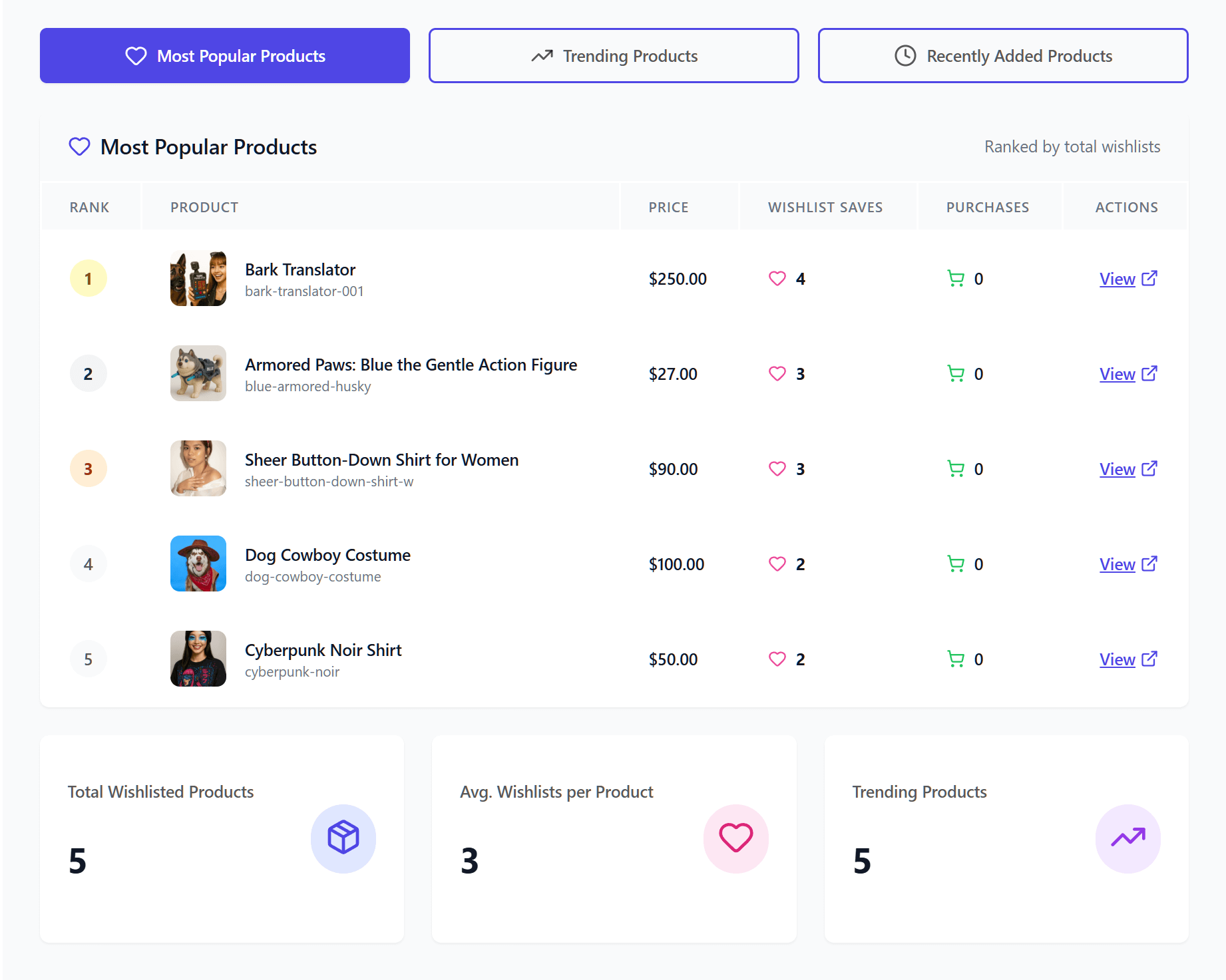
This engagement data also tells you what to reward. If a segment of shoppers keeps saving your most premium, expensive items, offering them an early-access VIP perk will probably motivate them a lot more than a tiny 5% discount.
How it works: Open up your wishlist analytics and filter for shoppers hitting that “5 saves in 30 days” threshold. Use that targeted list to decide exactly who to invite to your new program first, and use what they’ve saved to figure out which rewards will actually catch their attention.
4. Turn your top wishlisters into VIPs
Your most engaged shoppers deserve a lot more than the standard, automated treatment. A VIP approach turns their high engagement into genuine status, which is easily one of the strongest loyalty levers you have.
Once you find those top wishlisters from Step 3, don’t just sit around waiting for them to stumble across your new program. Reach out directly! Send them a highly personalized, plain-text email that feels completely exclusive. Say something simple like: “Hey, we noticed you have great taste. Here is a private VIP link to take 15% off anything currently sitting on your wishlist.”
SaveTo Wishlist Pro actually includes role-based access, meaning you can easily build a hidden VIP section on your site just for this active group. Give them first dibs on early access sales, or give them an exclusive first look at popular restocks.
You can also hand them a referral reward to share their saved favorites. Since sharing a wishlist naturally exposes your products to entirely new people, your most loyal customers quietly double as your absolute best acquisition channel.
How it works: Use your analytics to pull your most engaged shoppers, then send them a personalized outreach email offering a VIP perk or referral incentive. Just make sure to keep the group small enough that the VIP status actually feels genuinely exclusive.
5. Launch with the right tools
SaveTo Wishlist tells you exactly who to reward, but a dedicated loyalty platform actually runs the rewards. Keeping these two jobs completely separate keeps your setup simple and easy to manage.
For the rewards engine itself, grab a dedicated WooCommerce loyalty program plugin to handle the points, redemptions, and automated perks as your customers shop. When you pair that engine with the engagement signals from your wishlist data, you get a system that rewards the right people automatically, rather than just taking a wild guess.
Here’s the secret to a successful launch: don’t overcomplicate it! Start with just one clear earning rule (like “$1 spent = 1 point”) and one or two easy-to-understand rewards. You can always layer on more complexity once your customers are actually engaging with it.
How it works: Set up your rewards engine with a solid loyalty plugin and define exactly how customers will earn and redeem their points. Then, plug in your wishlist analytics to decide exactly who to prioritize and invite to the program first.
6. Measure and improve
A loyalty program is never truly “done.” You have to track a few key numbers so you can actually see what’s working and adjust your strategy on the fly.
Here are the specific metrics and benchmarks you need to watch:
- Program enrollment: Are those highly engaged wishlisters you found in Step 3 actually signing up?
- Redemption rate: Are people actually using their points? You want to aim for a 20% to 30% redemption rate. If your number sits below that, your rewards are either way too hard to earn or just too boring to care about.
- Repeat purchase rate: Are your loyalty members buying more often than your non-members?
- Average order value (AOV): Are your members spending more per transaction over time?
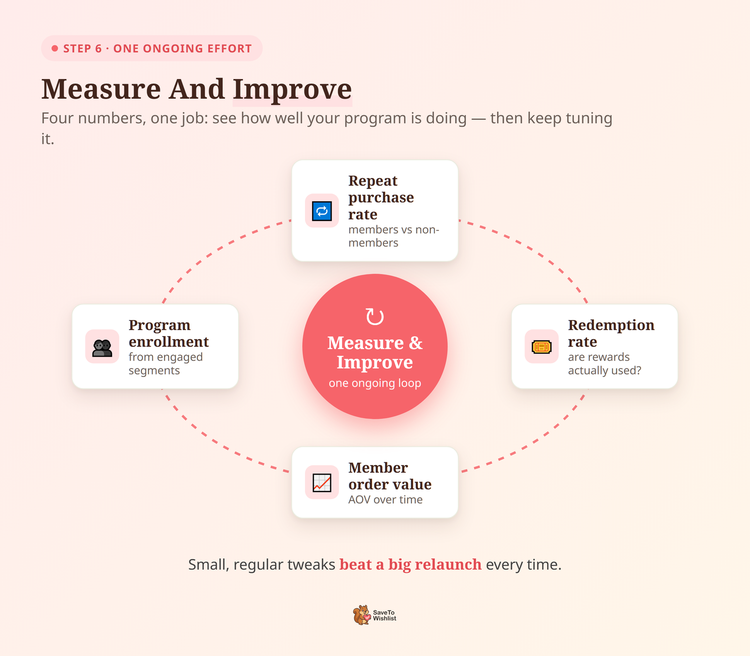
If your members aren’t buying more than your non-members, your rewards or earning rules need some serious work. Remember, making small, regular tweaks based on this data will always beat doing a massive, stressful relaunch every single time.
How it works: Check your dashboard monthly to track your redemption rate, repeat purchases, and member AOV. If your redemption rate drops below 20%, quickly tweak your point values or offer a more exciting reward to get your shoppers engaged again.
Your Loyalty Program Checklist
- Choose a program type that fits how customers buy.
- Pick rewards customers genuinely value, tied to repeat behavior.
- Use wishlist analytics to find your most engaged shoppers.
- Invite top wishlisters into a VIP or referral perk.
- Run the rewards with a dedicated loyalty tool.
- Track repeat purchase rate and redemption monthly.
Start Rewarding The Customers Who Matter Most
The stores that win with ecommerce loyalty programs aren’t the ones with the flashiest points schemes. They’re the ones that know exactly who their best customers are. Then they reward them before a competitor does. An ecommerce loyalty program gives you the structure, and your wishlist data gives you the aim.
Here’s the short version:
- Choose your loyalty program type.
- Pick rewards customers actually want.
- Find your most loyal customers with wishlist data.
- Turn your top wishlisters into VIPs.
- Launch with the right tools.
- Measure and improve.
Want to know who to reward first? Use SaveTo Wishlist Pro analytics to find the most engaged shoppers in your store.
Frequently Asked Questions
What is the best type of ecommerce loyalty program?
It depends on how customers buy. Points programs suit frequent purchases, while tiered programs suit a wide range of customer value. Meanwhile, VIP programs suit rewarding your most engaged shoppers. Basically, many stores combine a points base with a VIP tier on top.
How do wishlists help with a loyalty program?
Wishlists reveal who’s most engaged before they’ve made enough purchases to stand out in sales reports. SaveTo Wishlist Pro analytics show which products are most wishlisted and which customers are most engaged. Thus, you can determine who to invite and reward first.
Does SaveTo Wishlist run the loyalty program itself?
No. SaveTo Wishlist helps you identify and segment your most engaged customers through wishlist data and analytics. You run the actual points and rewards with a dedicated loyalty tool. Then you use the wishlist signals to decide who to prioritize.
What rewards work best for ecommerce loyalty?
Store credit, exclusive discounts, free shipping, early access, and members-only products tend to perform well. Tie rewards to repeat behavior rather than one-time sign-ups. That way the program builds a genuine habit.
How do I measure if my ecommerce loyalty program is working?
Compare repeat purchase rate and average order value between members and non-members. You should also watch your reward redemption rate. If members aren’t buying more often than non-members, adjust your earning rules or rewards.